

What if I told you that buried inside a regular trading card box, sitting right next to the base cards and foil parallels, there might be an original piece of hand-drawn artwork? A one-of-a-kind illustration that exists nowhere else on the planet?
That’s exactly what a sketch card is. And once you truly understand what they are, you’ll never look at a trading card box the same way again.
Sketch cards are cards where the front features an original drawing, done by a real, commissioned artist, on blank card stock. One copy. No reprints. Not a scan, not a print, not a digital reproduction. The actual pencil-and-ink original, pulled straight from a pack. Pull one and you’re holding something that exists exactly once in the entire world.
Here’s everything you need to know to find them, evaluate them, and flip them for serious money.
What Exactly Is a Sketch Card?
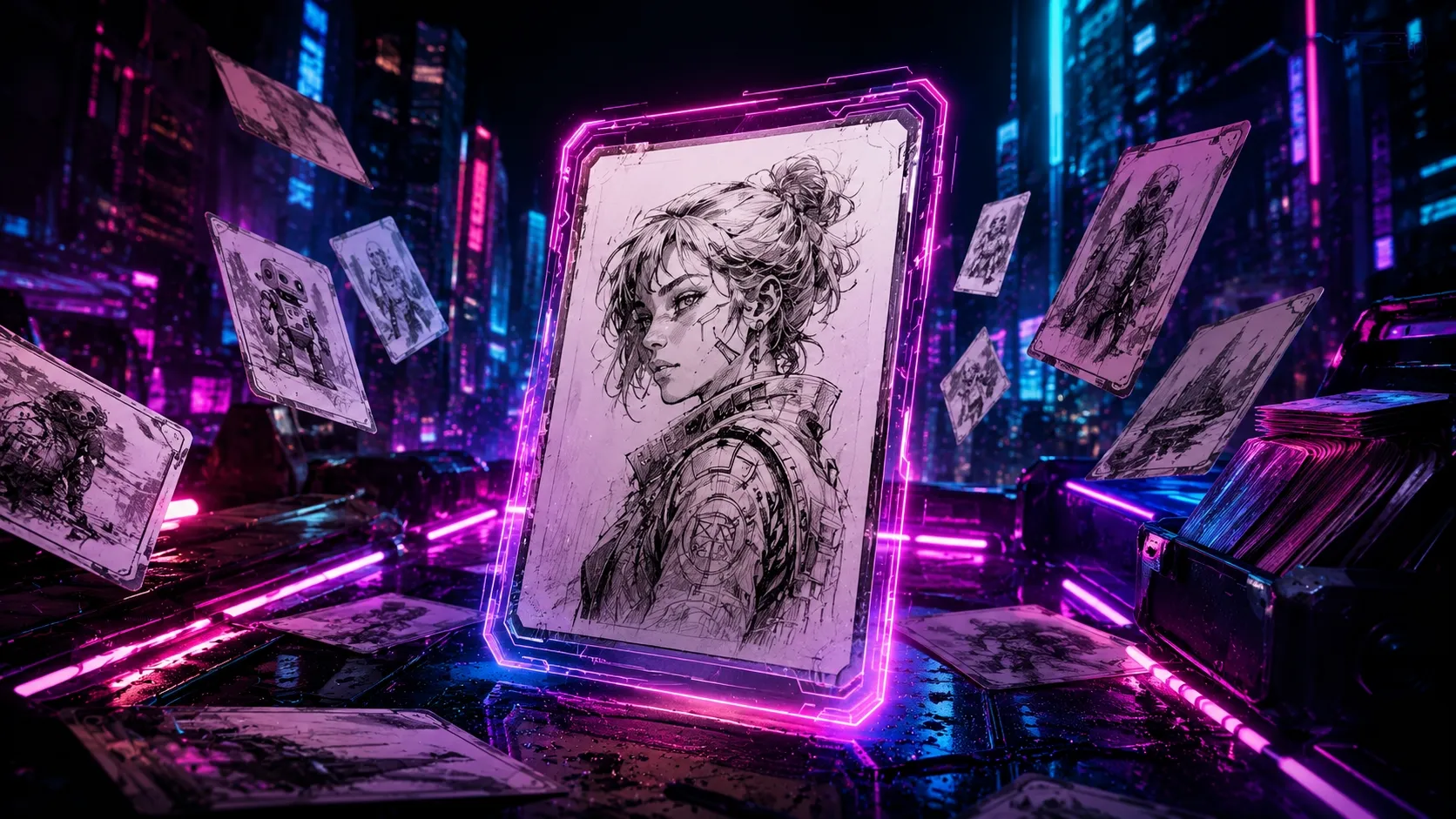
A sketch card is an original hand-drawn artwork inserted randomly into trading card packs. The card is standard size, 2.5 × 3.5 inches — but instead of a printed image, it has a blank white front that an artist used as a tiny canvas.
Card manufacturers like Topps, Upper Deck, Rittenhouse, and Breygent commission artists to produce these originals specifically for insertion into hobby boxes. Each card is unique. Each is signed by the artist on the back. And each one is a complete mystery until the moment someone rips open that pack.
That unpredictability is part of what makes the format so addictive. You could pull a rough 10-minute pencil sketch — or you could pull a full-color painted masterpiece by a sought-after artist. The pack doesn’t give you any warning either way.
Key Facts About Sketch Cards:
| Feature | Detail |
|---|---|
| Art type | Original hand-drawn (pencil, ink, watercolor) |
| Quantity per card | 1 of 1 — absolutely unique worldwide |
| Standard size | 2.5 × 3.5 inches |
| Who creates them | Commissioned artists hired by manufacturers |
| How they’re inserted | Randomly packed into hobby boxes |
| Artist signature | Yes — on the back of every sketch card |
| When they appeared | Late 1990s; exploded in popularity post-2000 |
How Much Are Sketch Cards Actually Worth?
This is the question every new collector asks first, and the honest answer is: wildly, dramatically, confusingly different from card to card.
Sketch card values range from literally $5 to well over $5,000. The spread is enormous. Here’s what actually moves the needle on price:
The Four Factors That Drive Sketch Card Value:
- The artist’s reputation: A sketch by a highly followed artist with a dedicated collector base is worth significantly more than one by someone unknown. Some collectors exclusively chase work from specific artists the way others chase specific players.
- The subject matter: A Spider-Man sketch card is worth more than a sketch of a random background character. Popular, recognizable characters drive value in every franchise.
- Execution quality: The market knows the difference between a detailed full-color piece and a rough five-minute pencil sketch. Be honest when evaluating what you have.
- The franchise: Star Wars sketch cards consistently trade at a premium because the collector base is enormous and passionate. A sketch from a niche franchise moves slower and cheaper.
Rough Value Ranges:
Artist & Character Type                  Estimated Value
-------------------------------          ----------------
Unknown artist, minor character          $5 – $25
Unknown artist, popular character        $20 – $75
Known artist, minor character            $50 – $175
Known artist, popular character          $100 – $500
High-demand artist, fan-fav character    $300 – $2,500+
Which Artists Make the Most Valuable Sketch Cards?
This is where real knowledge pays off, and where new collectors consistently leave money on the table.
There’s no single permanent list because artist demand shifts as careers evolve and social media followings grow. But the types of artists who consistently command premium prices share common traits:
- Recognizable personal style: Collectors can identify their work without a signature. This personal brand translates directly to demand and premium pricing.
- Strong social media presence: An active Instagram or Twitter/X following creates a ready buyer pool before sketch cards even hit the secondary market. Follow artists before sets drop.
- Comics or animation background: Artists with existing fan bases from professional illustration work bring that audience into card collecting with them.
- Consistent subject specialty: Artists known for exceptional Batman sketches, or Star Wars sketches specifically, develop loyal collector followings within those fandoms.
- High effort and detail: Full-color backgrounds, dynamic poses, multiple characters in a single card. The more effort is evident, the more buyers compete.
Signs of a High-Value Sketch:
- Full color rendering, not just black and white.
- Background art included – character isn’t floating on white space.
- Strong likeness to the character.
- Clean line work and confident mark-making.
- Unique pose or perspective, not a generic standing-pose.
- Signed and dated on the back.
- High-profile franchise character on front.
Where Do You Actually Find Sketch Cards?
Two routes: pull them from packs yourself, or buy them on the secondary market. Both work. Each has different risk profiles.
Pulling From Packs
The classic approach. Buy a hobby box, rip packs, hope to land a sketch. Pull odds vary by product, some premium boxes guarantee one sketch per box, while others seed sketches at roughly 1:80–1:100 packs. Always read the product information sheet before buying so you know what you’re working with.
The thrill is completely real. So is the risk. You might pull a full-color masterpiece by a beloved artist, or you might pull a rough pencil outline of a secondary character. That lottery element is part of the hobby’s DNA.
Buying on the Secondary Market
Smarter if you’re targeting specific artists or characters rather than just experiencing the pack-opening rush.
- eBay – biggest raw selection, always check “sold listings” before bidding
- Facebook collector groups – dedicated sketch card communities with direct peer-to-peer sales
- COMC – good for browsing individual artists’ work systematically
- Instagram – many artists post previews before sets drop, giving advance notice
- Card shows – vendors regularly have sketch card lots at below-market prices
Pro tip: Follow target artists on Instagram before their sets release. Artists often preview their work during production. This lets you identify cards you want before boxes even hit shelves.
How Do You Know If a Sketch Card Is Worth Grading?
Not every sketch card needs a slab. But some absolutely should have one, and knowing the difference saves real money.
Grade It If:
- The artist has a known following with sketches regularly selling above $100.
- The character is a top-tier name, Spider-Man, Batman, Darth Vader, Wolverine.
- The card is in excellent condition — sharp corners, no smudging, no creases.
- The artwork is high-effort: full color, strong background, detailed execution.
- You’re planning to resell at the higher end of the market.
Don’t Bother Grading If:
- It’s a quick pencil sketch with minimal detail or effort.
- The artist has no secondary market presence or following.
- The character is minor or obscure within the franchise.
- The card has any visible wear, creasing, or handling damage.
For sketch cards specifically, PSA assigns an “Authentic” designation confirming the card is a genuine one-of-one original. That “A” grade can meaningfully boost resale value for high-profile artists because it provides documented provenance, which matters when you’re selling something that costs hundreds of dollars.
| Grading Service | Typical Wait Time | Cost Per Card | Best For |
|---|---|---|---|
| PSA | 20–40 days | $20 – $50+ | High-value sketches |
| BGS | 20–40 days | $20 – $50+ | Condition-focused sales |
| CGC | 20–40 days | $20 – $50+ | Growing market presence |
Should You Collect Sketch Cards, Flip Them, or Both?
Here’s the honest take: both strategies work. It just depends on what you want out of the hobby.
If you’re collecting: Build around a theme. Chase sketch cards featuring your favorite characters. Or pick one or two artists whose style genuinely excites you and build a dedicated collection of their work. A themed collection, say, 15 high-quality Wolverine sketches by different artists, is both visually stunning and surprisingly valuable as a curated group.
If you’re flipping: Focus on knowledge gaps. Learn which artists are undervalued right now, before their reputation catches up to their talent. Learn which franchises have growing collector communities. Buy early, sell into the surge.
The real sweet spot is both. Rip hobby boxes. Keep the sketches by artists you love. Sell the ones outside your collection focus. Reinvest in targeted secondary market purchases where you have genuine expertise.
| Goal | Strategy | Expected Return |
|---|---|---|
| Collecting | Chase characters and artists you love | Emotional + long-term |
| Casual flipping | Sell raw on eBay quickly after pulling | $20 – $200 per card |
| Active investing | Study artists, buy undervalued, sell into demand | $100 – $1,500+ p/card |
Sketch cards are one of the most genuinely exciting categories in the entire hobby. They’re original artworks hiding inside regular product. They reward collectors who take the time to learn artist names, study execution quality, and act decisively when something special appears.
Start simple: find a franchise you love, grab a hobby box, and see what happens. Even a modest sketch from an unknown artist puts you in possession of something that exists once in the universe.
That’s kind of wild when you think about it.