
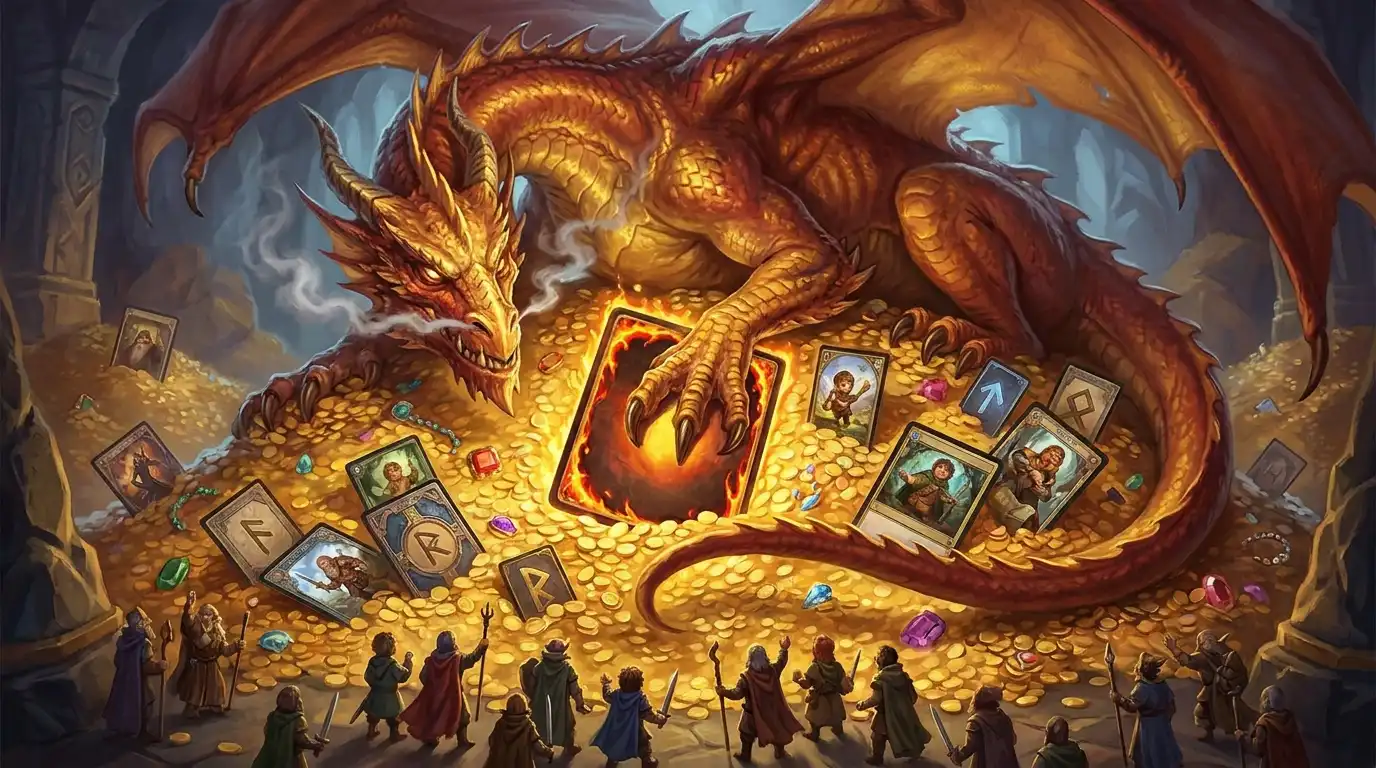

MTG The Hobbit cards have a clear early king: Gleaming Gold Smaug, the Magnificent. Wizards of the Coast has positioned it as the set’s headliner, limited the print run to approximately 500 copies, and placed it only in Collector Boosters. That mix of iconic character, tiny supply, premium foil treatment, and crossover demand gives Smaug a powerful chase-card profile.
The set releases worldwide on August 14, 2026, with prerelease events running August 7-13 and the Gift Bundle following on September 4. Smaug will dominate headlines, but the smartest collectors should also watch the book-cover cards, Dragon hoard frames, Dwarvish-language cards, classic-artist box toppers, and scene products. This is not a one-card set, even if the dragon gets most attention.
What Are MTG The Hobbit Cards?
MTG The Hobbit cards are a 2026 Magic: The Gathering crossover set based on the characters, places, and events of J.R.R. Tolkien’s The Hobbit. The release follows Magic’s earlier journey into Middle-earth but focuses more tightly on Bilbo, Thorin, Gandalf, the Dwarves, the Lonely Mountain, and Smaug.
The product is not only for Tolkien collectors. Playability and Commander demand can influence prices alongside artwork and character popularity.
MTG The Hobbit Release Details
| Detail | Confirmed Information |
|---|---|
| Global tabletop release | August 14, 2026 |
| Prerelease | August 7-13, 2026 |
| MTG Arena release | August 11, 2026 |
| Gift Bundle release | September 4, 2026 |
| Headliner chase | Gleaming Gold Smaug, the Magnificent |
| Approximate Smaug print run | 500 copies |
Why Is Gleaming Gold Smaug the Biggest Chase?
Gleaming Gold Smaug is the biggest chase because it combines recognizable subject matter with a clearly stated scarcity level. Wizards says approximately 500 copies will be printed, they will appear only in Collector Boosters, and the card will always be in English even when pulled from Collector Boosters in other languages.
That is a powerful setup. Dragons already have a strong collector base inside Magic. Smaug also reaches Tolkien fans who may not normally buy cards. Add a special gold foil treatment and a limited population, and you have a card that can attract high-end buyers before its first public sale.
Wizards gives an approximate print run of 500 but does not call the card individually numbered in its first-look information. Collectors should not label it “serialized” unless later details confirm numbering.
Will Smaug Be Worth Thousands?
Smaug could sell for thousands, especially during the first weeks, but no responsible collector can guarantee a stable price before real sales begin. Early high-end cards often have thin markets: one dramatic sale gets shared everywhere, while later transactions receive less attention.
My honest view is that Smaug has better long-term ingredients than most modern manufactured chases. The character is timeless, the print run is low, and the treatment matches the story. The risk is paying an opening-week price based on excitement rather than repeated sales.
Which Other MTG The Hobbit Cards Should Collectors Watch?
Collectors should watch Dragon hoard frames, book-cover cards, Dwarvish-language cards, Middle-earth classic-artist cards, and visually strong scene cards. These treatments offer more affordable ways to collect the set without turning every purchase into a lottery ticket for Smaug.
Dragon Hoard Frame Cards Could Be the Best Value
Dragon hoard frame cards could be the best value because they carry the visual identity of Smaug without requiring a 500-copy hit. Wizards has announced 25 cards with this frame. Non-foil and traditional foil versions can appear in Play and Collector Boosters, while surge foils are limited to Collector Boosters.
This is the treatment I expect many collectors to build as a mini set. Twenty-five cards is challenging but realistic, and the frame has a direct connection to the dragon’s treasure. A complete binder page sequence may be more satisfying than owning one expensive single.
Book Cover Cards Have Strong Display Appeal
Book-cover cards have strong display appeal because they are designed to resemble classic fantasy novels rather than standard Magic cards. Wizards says ten cards receive the borderless treatment. Non-foil and traditional foil copies can appear in both main booster types, while surge foils are Collector Booster exclusives.
These could age well if the art feels timeless. In crossover sets, I often prefer treatments that make sense for the source material. A book-inspired frame belongs in The Hobbit and should still look intentional years from now.
Dwarvish-Language Cards Are Niche but Memorable
The five Dwarvish-language cards appear only in Collector Boosters in non-foil and traditional foil. I would treat them as memorable lore pieces, not automatic investments.
Classic-artist box toppers add guaranteed artwork to booster boxes, but guaranteed placement limits scarcity.
Are The Hobbit Collector Boosters Worth Buying?
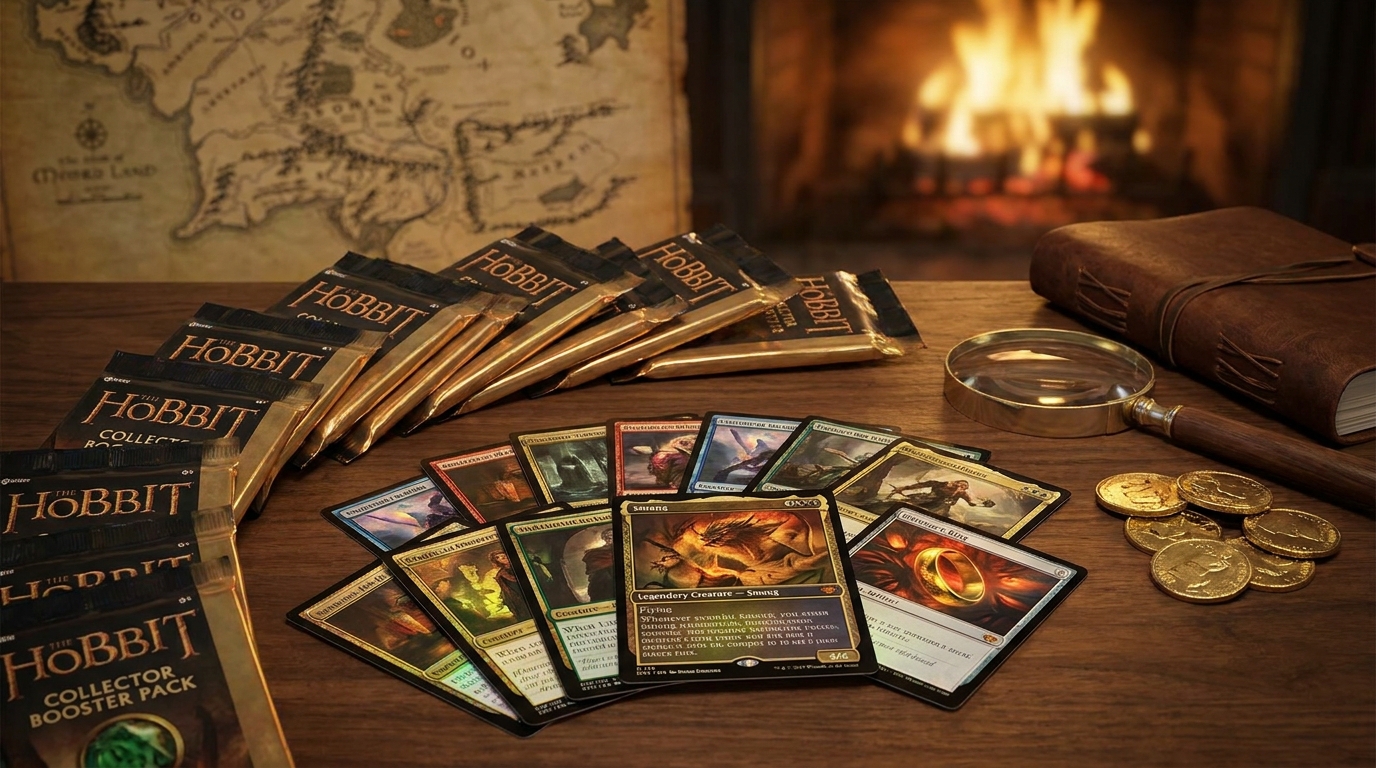
The Hobbit Collector Boosters are worth buying only if you enjoy premium treatments and can accept a very low chance of pulling Gleaming Gold Smaug. They are the only route to the 500-copy headliner, Dwarvish-language cards, and several surge-foil treatments, but that exclusivity will be built into the price.
Wizards lists a $37.99 MSRP per Collector Booster, with 12 packs and a classic-artist box topper per box.
Pros: Access to Gleaming Gold Smaug, surge foils, Dwarvish-language cards, and a premium opening experience.
Cons: High pack cost, extremely low Smaug odds, and the risk that buying boxes costs far more than buying favorite singles.
A collector should never justify a full box by mentally assigning Smaug value to it. Until official odds or production numbers for the complete Collector Booster run are known, the chance cannot be responsibly estimated.
Are Play Booster Boxes Better for Most Collectors?
Play Booster boxes are better for collectors who want to draft, build decks, explore the set, and receive a box topper without paying the Collector Booster premium. A box contains 30 packs.
You cannot pull Gleaming Gold Smaug from Play Boosters, but book-cover cards and Dragon hoard frames still give regular boxes meaningful collector content.
My practical recommendation is simple: buy Play Boosters for gameplay and broad set enjoyment. Buy Collector Boosters for premium-card entertainment. Buy singles for collection goals.
Which MTG The Hobbit Product Is Best to Buy?
The best product depends on whether you want cards, gameplay, display pieces, or a high-end chase.
For drafting, choose Play Boosters. For premium foils, choose Collector Boosters. Bundles target seasonal lands, Scene Boxes provide connected display art, and singles remain best for a specific character.
Scene Boxes deserve attention because Crack the Plates and Treasures of Smaug provide six known foil scene cards, art cards, boosters, and a display easel. Tolkien fans may prefer that certainty to a lottery product.
Is MTG The Hobbit a Good Investment?
MTG The Hobbit may produce valuable cards, but the set should not be treated as a guaranteed investment. Smaug’s limited population is compelling, yet most cards will be printed in much larger quantities and may fall after release as more boxes are opened.
Strong long-term cards combine iconic subjects, great art, limited treatments, playability, and crossover demand. Smaug checks most boxes; heavily supplied variants do not.
How Should Collectors Buy MTG The Hobbit Cards?
Collectors should enjoy one opening experience, then move toward singles after the market gains real supply. This avoids two common mistakes: buying too much sealed product while chasing one card, and paying inflated first-week prices for every attractive variant.
My plan would be to open a small amount for fun, build a want list by treatment, wait for Collector Booster supply, compare foil versions, and treat Gleaming Gold Smaug as a trophy purchase rather than a normal set goal.
Final Thoughts
Gleaming Gold Smaug will rule the headlines, and deservedly so. Approximately 500 copies, Collector Booster exclusivity, a special gold treatment, and one of fantasy’s most famous dragons create a serious modern chase.
Still, I think the lasting strength of MTG The Hobbit cards will come from the full visual package. Book covers, Dragon hoards, Dwarvish text, classic artists, lands, and scene cards give collectors several ways to enjoy the release. Chase Smaug only with money you can comfortably lose. Collect the rest because you genuinely want to go there and back again.
Related Reading
Frequently Asked Questions
When do MTG The Hobbit cards release?
The global tabletop release is August 14, 2026. Prerelease runs August 7-13, MTG Arena launches August 11, and the Gift Bundle follows September 4.
How many Gleaming Gold Smaug cards exist?
Wizards says approximately 500 copies will be printed.
Can Gleaming Gold Smaug appear in Play Boosters?
No. The Gleaming Gold headliner version appears only in Collector Boosters.
Are Collector Boosters the best value?
Not usually. They offer premium treatments, while singles are more efficient for specific targets.
What is the best affordable Hobbit subset to collect?
Dragon hoard frame cards and book-cover cards look like the strongest affordable mini-set options because they have clear visual themes and multiple obtainable versions.