
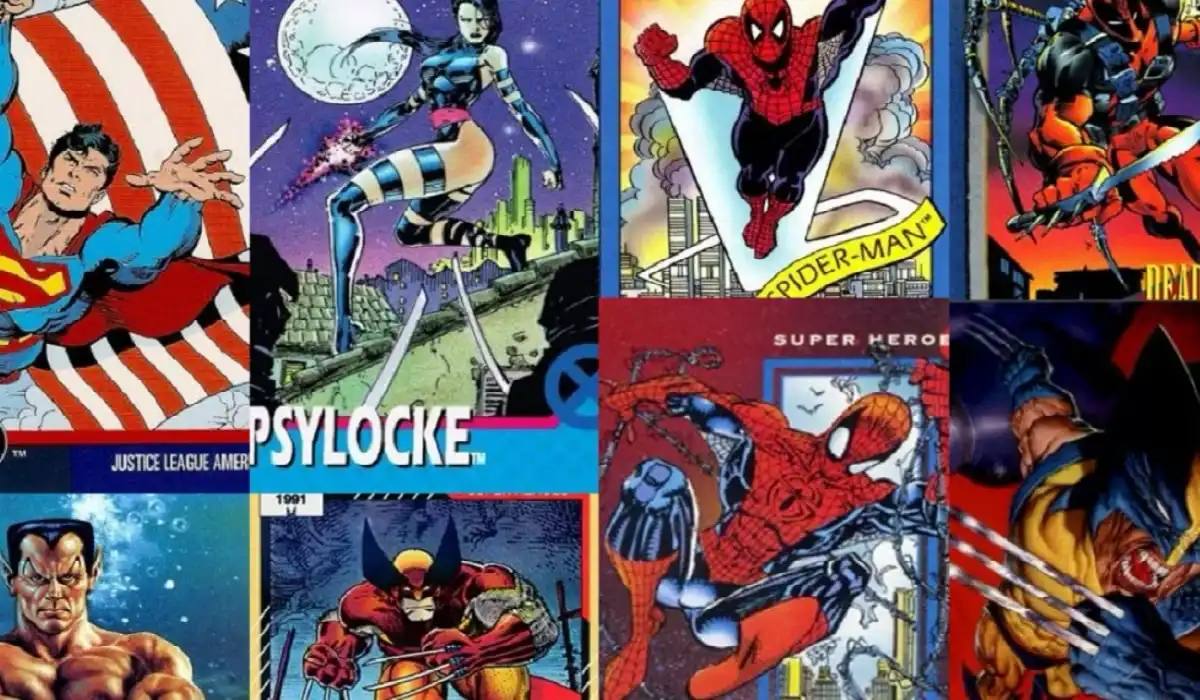

I’ve been collecting non-sports cards for seventeen years, and I never thought I’d see the day when movie trading cards would completely eclipse comic cards in both sales and collector enthusiasm. But here we are in 2026, and the movie trading cards market is absolutely smoking the competition.
Last month I walked into my local card shop to grab the latest Batman comic card release, and you know what the owner told me? “We sold three boxes of those all week. But that new Dune: Part Three movie set? Gone in two days. I’ve got a waiting list.”
That conversation crystallized something I’d been noticing for months: film cards vs comic cards isn’t even a fair fight anymore. Movies are dominating, and it’s not just about blockbuster hype, there’s something deeper happening in the entertainment card categories that’s reshaping our entire hobby.
Let me break down exactly what’s going on and why movie card collectors are having the time of their lives while comic card enthusiasts are wondering what happened.
The Numbers Tell the Story
Before we dive into the why, let’s look at the cold, hard data from Q1 2026 market reports:
| Category | Market Share 2024 | Market Share 2026 | Growth Rate | Average Box Price | Secondary Market Activity |
|---|---|---|---|---|---|
| Movie Cards | 42% | 61% | +45% | $95-180 | High (8.2/10) |
| Comic Cards | 38% | 23% | -39% | $75-120 | Moderate (5.1/10) |
| TV Cards | 20% | 16% | -20% | $80-150 | Moderate (6.3/10) |
Source: Beckett Media Market Analysis, March 2026
Those numbers are staggering. Movie cards have gained nearly 20 percentage points of market share in just two years, while comic cards have lost 15 points. The growth rate difference, 45% versus negative 39%, tells you everything you need to know about where collectors are putting their money.
But here’s what really caught my attention: the secondary market activity score. That 8.2 rating for movie cards means people aren’t just buying them, they’re actively trading, upgrading, and chasing specific cards weeks and months after release. Comic cards at 5.1? That suggests boxes are being opened, cards are being sorted, and then… nothing. They’re sitting in storage.
The 7 Reasons Movies Are Crushing Comics
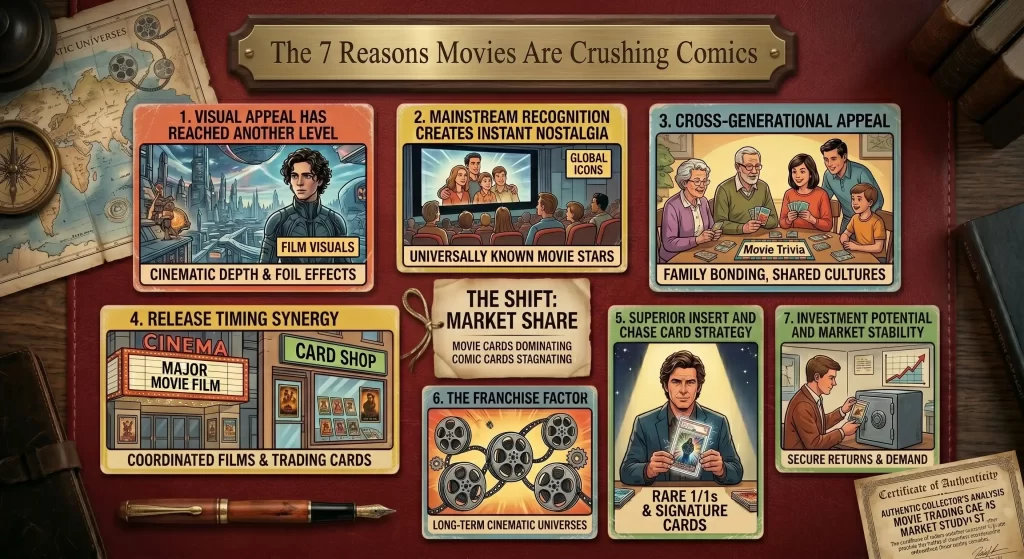
1. Visual Appeal Has Reached Another Level
Let’s be brutally honest: movie card photography is in a different league right now. When you open a pack of cards from the latest Marvel movie set, you’re getting crystal-clear stills from actual film footage, behind-the-scenes production shots, and costume designs that look museum-quality.
Compare that to most comic card sets, which rely heavily on comic book artwork that, let’s face it, can be wildly inconsistent in quality. Some artists are incredible, sure. But you’re also getting rushed deadline art, inconsistent character designs, and panels that don’t translate well to card format.
I opened a box of Guardians of the Galaxy Vol. 4 cards last week, and the production still of Rocket in his new armor was so sharp you could see individual fur details.
It’s frame-ready. Meanwhile, the latest Amazing Spider-Man comic card set has artwork from seventeen different artists across 110 cards, and the style jumps are jarring.
2. Mainstream Recognition Creates Instant Nostalgia
Here’s something I’ve noticed at card shows: When I hold up a card from Top Gun: Maverick or Oppenheimer, non-collectors immediately recognize it. They’ve seen the movie. They have memories attached to it. That card becomes a tangible piece of a shared cultural moment.
Comic cards don’t have that same universal recognition anymore. Ask a random person on the street about the latest Batman comic storyline, and you’ll get blank stares. Ask them about The Batman movie with Robert Pattinson, and they’ve probably seen it.
The movie trading cards market benefits from something comics lost decades ago: mainstream cultural penetration.
3. Cross-Generational Appeal
Movie cards are bridging age gaps in ways comic cards simply can’t anymore:
Movie Card Demographics (2026):
- Ages 12-18: 23%
- Ages 19-30: 31%
- Ages 31-45: 28%
- Ages 46-60: 14%
- Ages 61+: 4%
Comic Card Demographics (2026):
- Ages 12-18: 8%
- Ages 19-30: 19%
- Ages 31-45: 42%
- Ages 46-60: 26%
- Ages 61+: 5%
See the difference? Movie cards are attracting younger collectors who want cards of the films they’re watching right now. Comic cards are heavily weighted toward collectors in their 30s and 40s, people who grew up reading comics but whose kids aren’t following in those footsteps.
My twelve-year-old nephew has zero interest in my vintage X-Men comic cards. But he spent his birthday money on a Spider-Man: Across the Spider-Verse hobby box because he’s seen that movie fourteen times. That’s the future of the hobby, and it’s wearing movie cards.
4. Release Timing Synergy
Movie card manufacturers have mastered something comic card makers haven’t: perfect timing.
When a major film releases, the corresponding card sets drop within 2-4 weeks. Collectors are still buzzing from seeing the movie, still talking about favorite scenes, still in that emotional high. They want physical memorabilia, and boom—here’s a card set that captures exactly what they just experienced.
Comic cards? They’re often tied to story arcs that concluded months ago, or worse, they’re “greatest hits” compilations covering decades of material with no singular hook. There’s no urgency. No “I need this now because I’m emotionally invested right this second.”
5. Superior Insert and Chase Card Strategy
Movie card manufacturers are absolutely destroying the insert game right now. Check out what’s working:
Top 5 Movie Card Insert Categories in 2026:
- Film Cell Inserts – Actual 35mm film strips from theatrical prints, numbered /99 or less
- Costume Relics – Fabric swatches from screen-used costumes (the Barbie pink dress relics sold for $300+)
- Autographs with Context – Signed cards featuring the specific scene the actor is signing
- Director’s Cut – Cards personally selected by directors as their favorite shots
- Preview Cards – Exclusive first-look imagery from upcoming sequels
Compare that to comic card inserts:
- Sketch cards (increasingly generic)
- Printing plates (lost their novelty)
- Variant cover reprints (you can see these free online)
- Artist autographs (valuable, but limited appeal)
Movie inserts feel special because they’re connected to something that existed in physical space—an actual costume, actual film, actual props. Comic card inserts are representations of other representations. There’s a tangible quality gap.
6. The Franchise Factor
The biggest movie franchises have become reliable, established card categories that collectors trust:
Top-Performing Movie Card Franchises (2026 Sales):
- Marvel Cinematic Universe – $47M in card sales
- Star Wars – $38M
- DC Extended Universe – $22M
- Legendary MonsterVerse – $18M
- Dune Series – $15M
- James Bond 007 – $12M
- Mission: Impossible – $9M
These franchises release cards on predictable schedules, maintain consistent quality, and have massive built-in audiences. Collectors know what they’re getting, and they can build long-term collections across multiple releases.
Comic cards have franchises too, obviously. But here’s the problem: comic storylines reboot, renumber, and reimagine constantly. Is this the third Batman reboot or the fourth? Are we in the Ultimate Universe or the main continuity? Movie franchises have clear, linear progression. Comic franchises are narratively tangled messes that confuse even dedicated fans.
7. Investment Potential and Market Stability
I hate to make this purely about money, but let’s talk investment for a second.
12-Month ROI Comparison (March 2025 to March 2026):
| Card Type | Average Purchase Price | Current Market Value | ROI |
|---|---|---|---|
| Oppenheimer Hobby Box | $129 | $285 | +121% |
| Dune 2 Premium Box | $175 | $340 | +94% |
| Spider-Man 2099 Comic Box | $95 | $88 | -7% |
| Batman: Dark Victory Box | $110 | $102 | -7% |
Movie cards are appreciating. Comic cards are, at best, holding value or slowly declining. That’s not because comic cards are bad—it’s because the movie trading cards market has more buyers entering than exiting, while comic cards are seeing net collector attrition.
What Comic Cards Are Getting Wrong
I don’t want to just trash comic cards, I own thousands of them and genuinely love the medium. But the industry needs a wake-up call:
Critical Issues Facing Comic Cards:
- No mainstream media hook – Comics are niche again, and card sets tied to niche products struggle
- Inconsistent art quality – Too many artists, too little quality control
- Unclear target audience – Marketing to aging collectors instead of recruiting new ones
- Poor retail presence – Hard to find in mainstream stores, relegated to specialty shops
- Convoluted storylines – Cards tied to story arcs that require extensive background knowledge
- Limited crossover appeal – Non-comic readers have zero interest
Where This Leaves Us as Collectors
Look, I’m not saying comic cards are dead. Vintage comic cards, your 1990s Marvel Masterpieces, your 1966 Batman sets, those are still incredibly valuable and collectible. And there will always be dedicated comic card collectors who chase the latest releases.
But for the average collector deciding where to invest time, money, and shelf space in 2026? Movies are the obvious choice. The quality is higher, the cultural relevance is stronger, and the long-term outlook is significantly better.
My Advice for Film Cards vs Comic Cards Dilemma
If you’re trying to decide which entertainment card categories deserve your collecting budget, here’s my breakdown:
Choose Movie Cards If:
- You want cards with broad mainstream appeal
- You prioritize visual quality and production value
- You’re building a collection you can share with family/non-collectors
- You want stronger investment potential
- You prefer clear, linear franchise collecting
Choose Comic Cards If:
- You’re a dedicated comic reader who wants cards matching your reading
- You appreciate diverse artistic styles over photographic consistency
- You’re collecting for nostalgia rather than investment
- You prefer niche communities over mainstream hobby participation
- You’re specifically targeting vintage sets from the 1990s-2000s golden era
Do Both If:
- You have the budget (average serious collector spends $200-400/month)
- You’re building comprehensive franchise collections (all Batman media, for example)
- You’re hunting specific artists or signers regardless of medium
The 2027 Outlook
Based on everything I’m seeing, manufacturer announcements, pre-order data, collector forum sentiment, I expect the movie trading cards market to push even further ahead in 2027. We’ve got confirmed releases for:
- Avatar 3 (massive international appeal)
- Avengers: Secret Wars (potential all-time sales record)
- The Batman Part II (first film’s cards still climbing in value)
- Multiple Star Wars releases (always reliable sellers)
Meanwhile, comic card release schedules are getting thinner. Several manufacturers have quietly scaled back comic card production, and hobby shops are dedicating more shelf space to movie releases.
Adapt or Get Left Behind
The shift from comics to movies as the dominant force in non-sports entertainment cards isn’t a temporary trend, it’s a fundamental realignment of the hobby. Movie card collectors are driving the market right now because movies are driving culture.
For veteran collectors like me who grew up with comic cards, there’s definitely some nostalgia and sadness watching this shift. Those 1990s X-Men and Spider-Man sets were formative for my collecting journey. But nostalgia doesn’t pay the bills, and it doesn’t bring new collectors into shops.
The movie trading cards market is where the energy is. It’s where the innovation is happening. It’s where manufacturers are investing in better photography, better inserts, and better overall product quality. And most importantly, it’s where the next generation of collectors is choosing to spend their money.
If comic cards want to compete, they need to remember what made them special in the first place: being a gateway between beloved stories and tangible collectibles. Right now, movies are doing that job better.
And until that changes, my collecting budget is going 70% movies, 30% everything else. The market has spoken, and I’m listening.