


Japan just deployed the nuclear option in the Pokémon scalping war.
Starting around August 2026, anyone who wants to buy select Pokémon TCG products or enter product lotteries on Pokémon Center Online in Japan will need to verify their identity using the government-issued “My Number Card”, Japan’s national identification system.
No card, no entry. No residency record, no purchase. Bots can’t fake a national ID. One person cannot submit 50 lottery entries under fake accounts. And overseas collectors? They’re effectively locked out entirely.
The announcement sent shockwaves through the collecting community, and reactions have been split almost perfectly down the middle. Japanese fans applauding. International collectors furious. Everyone curious whether it will actually work.
Here is everything confirmed, what the system does, who it affects, and the real debate happening in the hobby right now.
What Is Japan’s My Number Card?
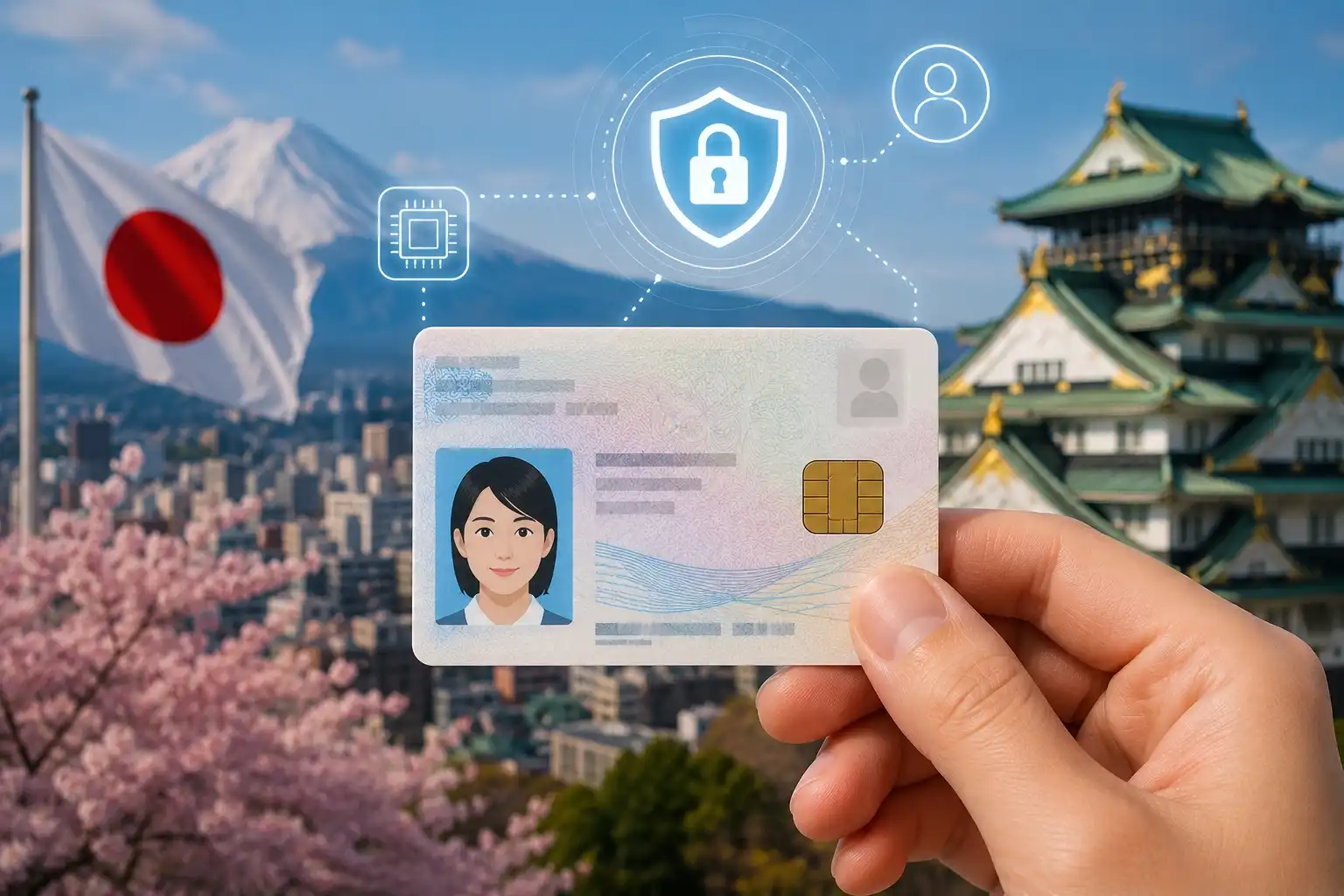
The My Number Card is Japan‘s government-issued national ID, it functions as both a photo ID and the equivalent of a social security card. It is voluntary (not mandatory), and takes 1-2 months to be issued after registration.
The card contains an embedded IC chip with the holder’s “User Authentication Electronic Certificate”, essentially a cryptographic proof that you are who you say you are, tied to Japan’s national registration system. The My Number Card is issued to:
- Japanese citizens
- Long-term foreign residents registered with the local government (juuminhyou)
- NOT issued to tourists, short-term visitors, or unregistered overseas residents
Because TPC’s announcement drops in May 2026 for an August 2026 launch, and the card takes 1-2 months to obtain, The Pokémon Company has reportedly urged Japanese citizens who don’t already have one to register immediately.
How Does The Verification System Work?
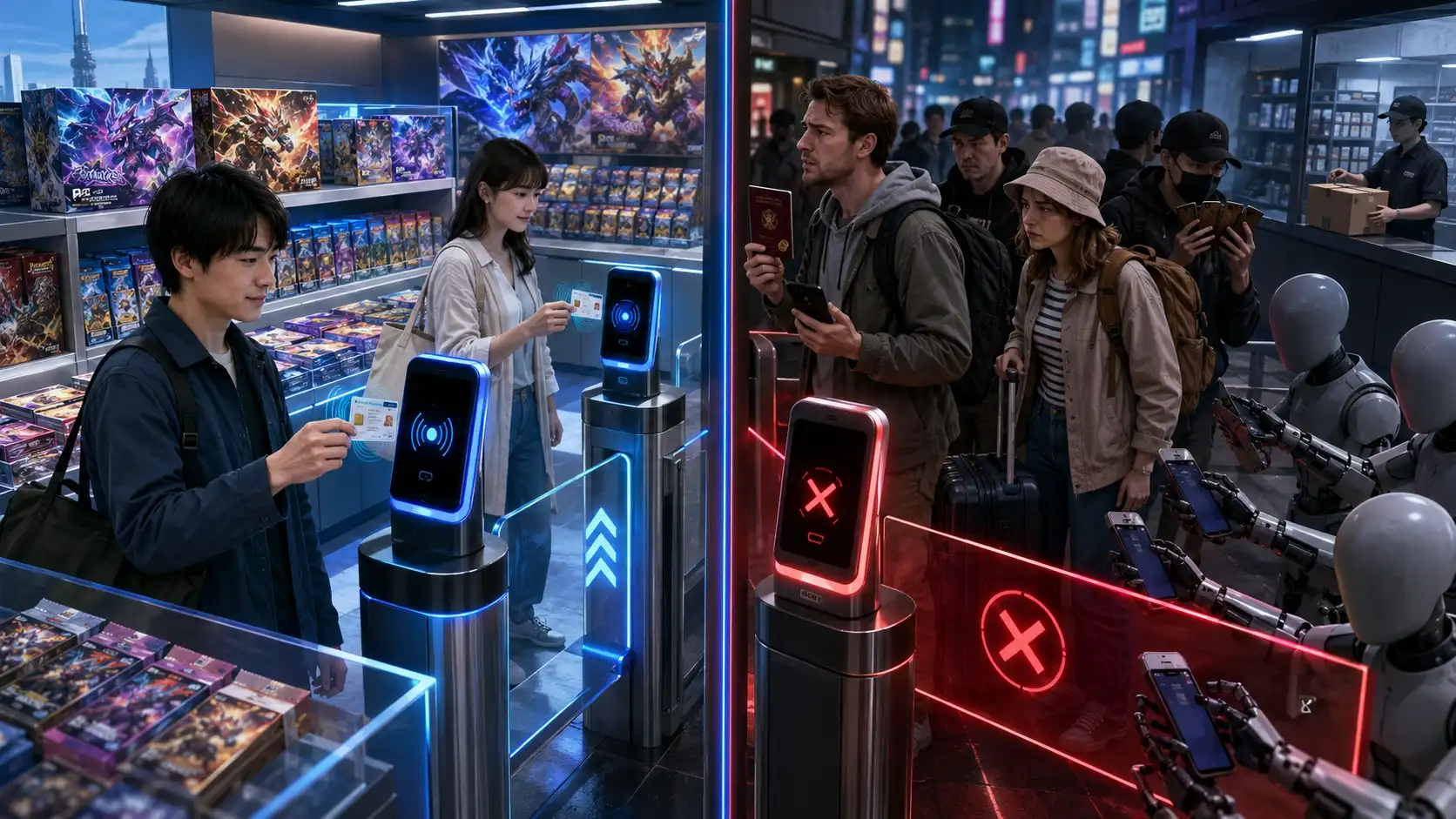
Using a government-approved third-party app, customers scan their My Number Card’s IC chip via their smartphone’s NFC reader. The verified identity links to their Pokémon Players Club account. Crucially: the unique ID number is NOT stored after verification.
| Step | What Happens |
|---|---|
| 1. Scan your card | Open a government-approved third-party app on your smartphone. Use your phone’s NFC reader to scan the IC chip embedded in your My Number Card. |
| 2. Generate a certificate | The app reads the “User Authentication Electronic Certificate” stored on the chip. This confirms you are a real, registered Japanese resident. |
| 3. Link to Players Club | The verified identity is connected to your Pokémon Players Club account. One real person = one account. Multiple accounts linked to the same ID are blocked. |
| 4. Unlock lottery/purchase | Only verified accounts can enter product lotteries or purchase select high-demand items from Pokémon Center Online. |
| 5. ID is not stored | Critically: The Pokémon Company states your unique My Number Card ID number is NOT stored after verification. Only the account authentication is retained. |
The technical approach is well-designed from a privacy standpoint. Rather than storing the actual My Number Card number, the system only verifies that a real registered person is behind the account.
What gets stored is essentially a one-to-one account authentication flag, not your ID number. This addresses the biggest privacy objection up front, though some collectors remain skeptical.
How Did We Get Here? Japan’s Escalating Scalping War
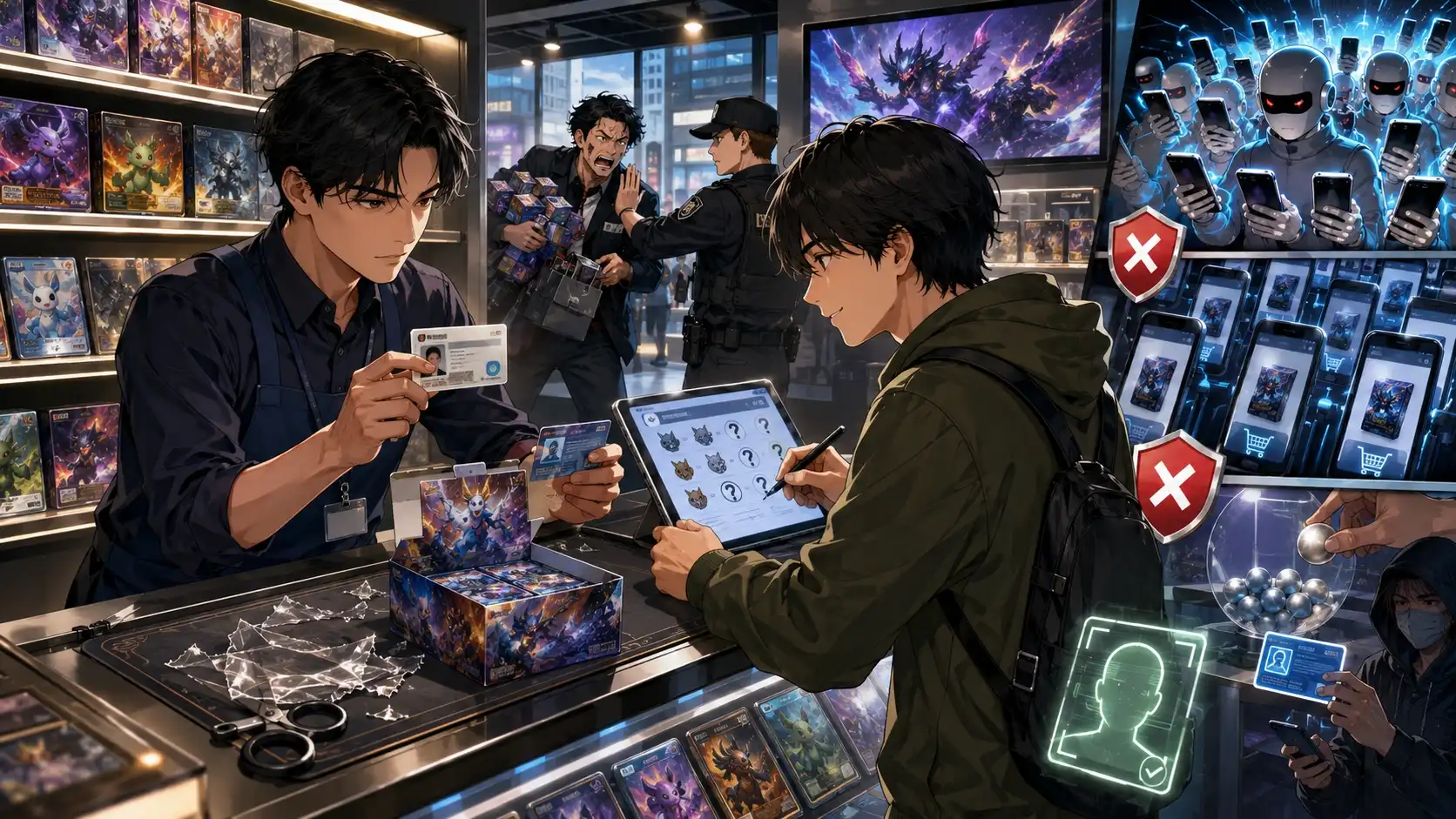
Ten billion Pokémon TCG cards were printed between March 2025 and March 2026. Shortages persisted anyway. The My Number Card announcement represents the strongest measure yet in a multi-year battle that has included quizzes, shrink wrap destruction, and lottery systems.
| Period | Measure | What It Did |
|---|---|---|
| 2021-2024 | Lottery Systems | Online products sold via lottery entry rather than first-come-first-served. Reduced bot dominance slightly |
| 2024-2025 | Purchase Limits | 1 box per customer enforced at retail. Reduced individual bulk buying but couldn’t stop organized groups |
| Early 2026 | Shrink Wrap Removal | Pokémon Center and other stores remove plastic film at point of sale, sealed boxes are worth less to scalpers who can’t guarantee pack integrity |
| April 2026 | The Quiz (Bic Camera) | Ikebukuro store requires 15-question Pokémon quiz to buy Ninja Spinner. Scalpers reportedly failing. One box max. Loyalty account required |
| May 2026 | My Number Card (Announced) | Government ID verification tied to Players Club. Online lotteries and select purchases require verified Japanese residency from August 2026 |
The Bic Camera quiz story, reported in late April 2026, went viral globally. A Tokyo Ikebukuro store required customers to answer 15 Pokémon knowledge questions before buying Ninja Spinner boxes.
No phones allowed. Pass the quiz and you still only get one box. Store staff also slash the shrink wrap on the box at point of sale, removing the sealed premium that scalpers depend on for resale value. Reports from X (formerly Twitter) suggested scalpers were genuinely failing the quiz and walking away empty-handed.
But quizzes work at physical retail. Bots and organized scalper networks don’t walk into stores, they hit websites at scale. Government ID verification is the digital-first response to that problem.
Who Can Still Buy, and Who Gets Locked Out
The system creates a clean dividing line: Japanese residents with My Number Cards in. Everyone else out. That means legitimate overseas fans are excluded alongside scalpers, and that’s the most contested part of this decision.
| Who | Status | Detail |
|---|---|---|
| Japanese citizens | Can buy | Full access, My Number Card issued automatically with residency record |
| Long-term foreign residents (Japan) | Can buy | My Number Card eligible if registered with local government (takes 1-2 months) |
| Short-term visitors/tourists in Japan | Locked out | My Number Card not available to tourists or visitors without residency records |
| Overseas collectors (non-Japan) | Locked out | Effectively excluded from Pokémon Center Online lotteries and select products |
| Multi-account scalpers | Blocked | One real person = one verified account. Multiple accounts linked to same ID blocked |
| Bot accounts | Blocked | Automated purchasing tied to no real identity, cannot pass NFC verification |
| Proxy/forwarding services (Japan-based) | Unclear | If the service holder is a verified Japanese resident, proxy buying may still be possible |
The most significant gray area: proxy services. If a Japan-based resident with a verified My Number Card operates a legitimate proxy purchasing service, they could theoretically buy on behalf of overseas customers. TPC hasn’t directly addressed this loophole, but squeezing the volume of individual scalper accounts is still a win even if proxies continue operating at smaller scale.
The Real Debate: for Vs. Against
This is where the hobby gets polarized. Japanese fans who have watched scalpers clear shelves for years are largely supportive. International collectors who relied on Pokémon Center Japan as a purchasing channel, legitimately or otherwise, are alarmed.
| The Case FOR | The Case AGAINST |
|---|---|
| Bots and fake accounts are eliminated, a real person with a real ID cannot create 50 lottery entries | My Number Card is voluntary in Japan, some genuine fans don’t have one yet and face a 1-2 month wait to get it |
| Multi-account scalpers are blocked, one person, one account, one lottery entry | Overseas collectors and fans are completely locked out of the platform, including genuine fans who were buying legitimately |
| Gives ordinary Japanese fans a dramatically better shot at retail-price product | Proxy services run by Japan-based residents may still be able to fulfill overseas orders, partially defeating the purpose |
| The My Number Card ID is not stored, verification is one-time and privacy risk is limited by design | Applying the same ID requirement to live tournament registrations raises separate questions, tournament attendance isn’t scalping |
| Japan’s scalping problem has required escalating countermeasures for years, the quiz and shrink wrap removal weren’t enough | International fans who travel to Japan and shop at events are also effectively excluded from major release purchases |
Will This Spread to Pokémon Center US, UK, and Australia?
As of this writing: no announcement, no indication. Currently confirmed for Japan only. But the hobby is watching, and fans in Singapore, Australia, and elsewhere are already calling for similar systems built on their own national ID infrastructure.
The structural challenge for Western markets is significant. Japan has a national ID card system that is relatively unified, a single My Number Card links to one identity across government services. Countries like the United States don’t have an equivalent national ID, making a direct copy-paste of this system impossible without major infrastructure building.
What’s more likely in the short term: improved lottery systems, stronger bot detection, and stricter account verification using phone numbers or payment methods. The hardcore version, government ID tied to purchases, requires a political and bureaucratic infrastructure that most Western countries haven’t built.
Singapore already has SingPass, a national digital identity system that multiple fans on PokeBeach have pointed to as a ready-made equivalent. South Korea has PASS. Japan’s implementation could serve as a proof of concept for any country with similar national ID infrastructure already in place.
For North America and Europe? Don’t hold your breath on a government ID requirement specifically. But don’t be surprised if Pokémon Center tightens lottery and purchasing eligibility through other verified identity methods in the 18-24 months following Japan’s August 2026 launch, particularly if the Japanese system demonstrably reduces scalping around the 30th Celebration release.
Is This Good for The Hobby?
Yes, with one honest caveat. The My Number Card system eliminates the most damaging scalping behaviors: bots, fake accounts, and bulk-buying at scale. The collateral damage, overseas collectors losing direct access, is real, but it’s targeting a secondary problem rather than the primary one.
The people who are most hurt by Pokémon scalping are Japanese fans. They live closest to the source and have watched product evaporate in seconds at every major release for years. The system is designed with them in mind, and it should meaningfully improve their experience.
For international collectors, the honest answer is this: Pokémon Center Japan was always primarily meant for Japanese residents. The convenience of overseas access was a feature, not a right, and the scalping crisis it enabled at scale made it unsustainable. Legitimate international purchasing channels (US/EU Pokémon Center, authorized retailers) aren’t affected.
The bigger question, which August 2026 will answer, is whether it works. Scalpers adapt. If the My Number Card system meaningfully reduces secondary market prices on Japanese-exclusive products and gives ordinary fans fair access to 30th Celebration product, that’s a win for the hobby regardless of what it means for international buyers.
Is Japan Getting It Right? Tell Us.
This is genuinely one of the most controversial policy decisions in the Pokémon TCG’s history, and the debate is far from settled. Are you a Japanese resident who thinks this is long overdue? An international collector who feels unfairly locked out? Someone who thinks scalpers will just route around it in two weeks?
Drop your take in the comments. And if you’re in Japan without a My Number Card yet, you have about six weeks before August. The registration queue is apparently moving.
External reference: For official or source context, see PokeBeach report on Pokémon Center Japan ID verification.