
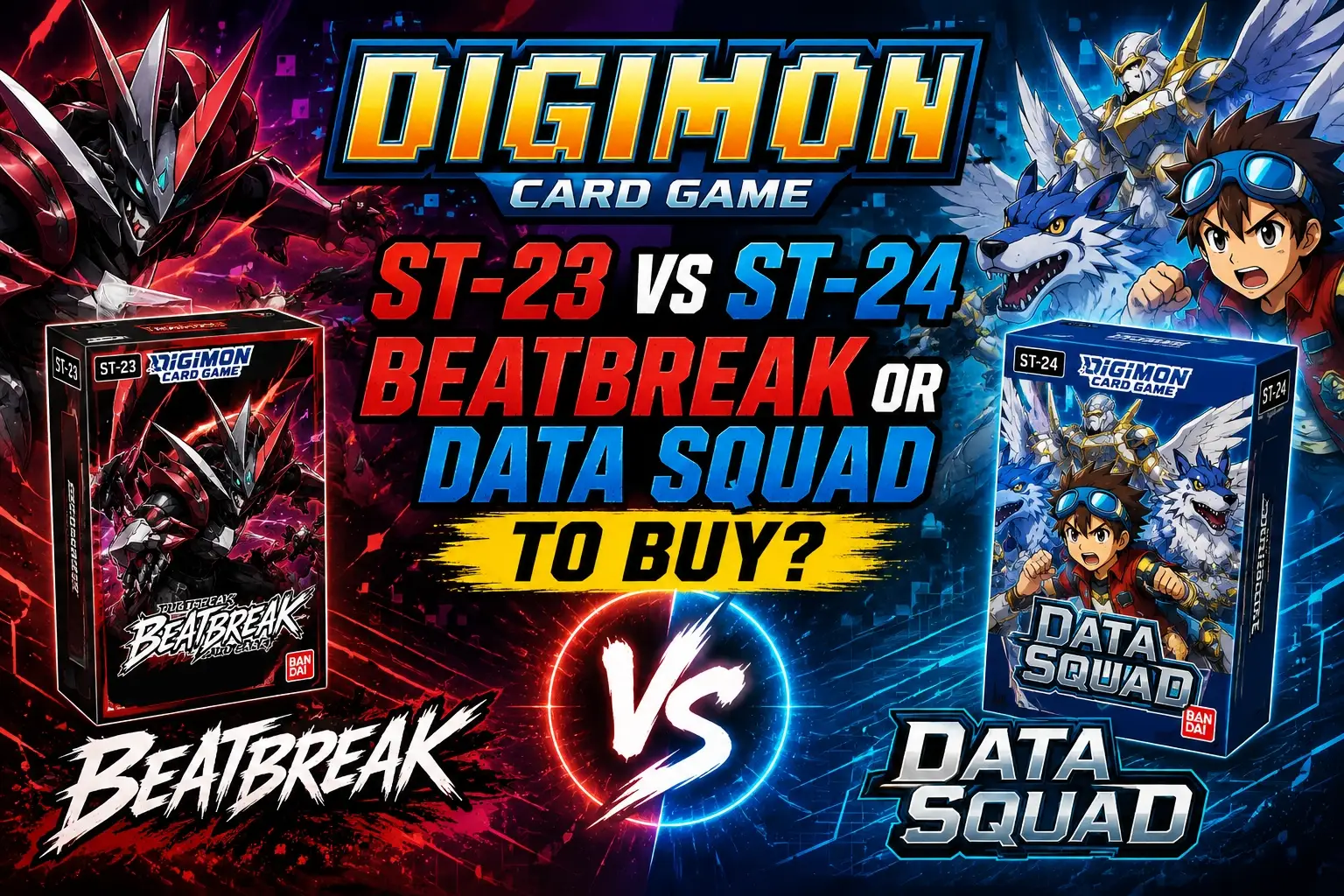

Bandai did something unusual on May 15, 2026, they didn’t drop one new Digimon starter deck. They dropped two. Digimon Beatbreak [ST-23] and Digimon Data Squad [ST-24] launched on the exact same day, and now every Digimon TCG newcomer is staring at retailer pages asking the same question: which one do I actually buy first? You’re in the right place.
Let’s settle it.
What Are the Digimon ST-23 and ST-24 Starter Decks?
ST-23 (Beatbreak) and ST-24 (Data Squad) are two new pre-constructed starter decks for the releases/”>Digimon Card Game, both released on May 15, 2026 . They’re designed as standalone entry points, meaning you can open the box, shuffle, and play immediately without needing any other cards.
If you’re new to Digimon Card Game, here’s the quick context. Bandai numbers their starter decks ST-01, ST-02, and so on. Each starter is built around a different evolution line or theme, and they’re explicitly designed to be beginner-friendly. You don’t need to know which booster set is meta. You don’t need to build from scratch. You just need to grab one and play.
The unusual part of this launch is that Bandai shipped two starter decks on the same date. That’s a strong signal, it means they’re positioning both decks as parallel entry points for two different types of player.
Digimon ST-24 Data Squad, The Nostalgia Pick
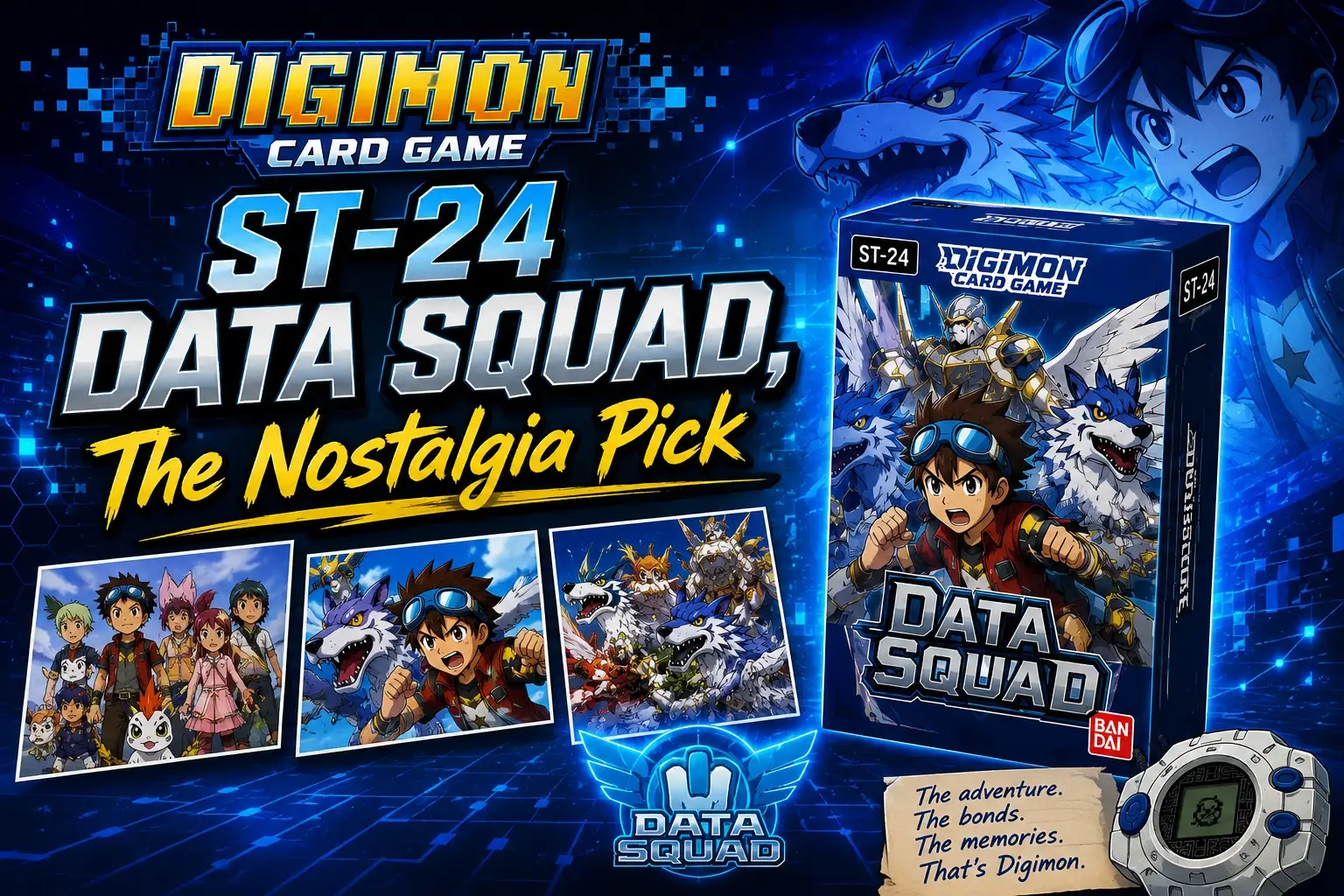
ST-24 Data Squad is the starter deck for Digimon fans who grew up with, or have rewatched, Digimon Data Squad (Digimon Savers), the 2006, 2007 anime series. It’s a strong pick if you want a starter built around recognisable characters from an established Digimon series.
Data Squad is the franchise’s fifth main anime series, and it’s the one that introduced Marcus Damon (Masaru Daimon in Japan) and his Agumon. For fans of that era, this starter deck is essentially a love letter.
Why that matters for a starter deck buyer:
- Familiar characters. If you watched Data Squad, you already know what to expect from the Digimon line-up.
- Easier emotional buy-in. Playing with Digimon you grew up with hits different from learning a brand new roster.
- Long-tail collector value. Anime-tied starter decks tend to stay relevant longer than generic decks because the fandom doesn’t disappear.
The honest caveat: the specific card list, the deck’s competitive viability, and how it ranks against the current Digimon TCG meta will only become clear after the community spends a few weeks testing it. Treat any “ST-24 is the best/worst starter ever” hot take in week one with the scepticism it deserves.
Digimon ST-23 Beatbreak, The Fresh Pick
ST-23 Beatbreak is the more curious launch of the pair, it’s a starter deck that isn’t tied to one of the headline classic Digimon anime series, which means it’s a fresher concept for the card game and a more “blank slate” entry for new players who don’t have nostalgia preferences.
Beatbreak is the wildcard of the two. Because it doesn’t carry an obvious anime brand attached to it the way Data Squad does, it lands differently with two distinct types of buyer.
Who Beatbreak is great for
- Completionist collectors. Anyone collecting every numbered ST deck wants this regardless of theme.
- Fresh players. New TCG players who don’t have nostalgia bias and just want a clean entry point.
- Mechanic-curious buyers. Players who care more about how a deck plays than which characters are on the cards.
Who might skip Beatbreak
- Players who specifically want characters from a series they recognise.
- Buyers on a strict budget who only have room for one starter and lean nostalgic.
ST-23 vs ST-24, Side-by-Side Comparison
Both starter decks launched on the same day, are both pre-constructed, and both serve as beginner entry points to the Digimon Card Game. The real difference comes down to whether you want anime nostalgia (ST-24) or a fresh thematic experience (ST-23).
| Feature | ST-23 Beatbreak | ST-24 Data Squad |
|---|---|---|
| Release Date | May 15, 2026 | May 15, 2026 |
| Format | Pre-constructed starter deck | Pre-constructed starter deck |
| Theme tie-in | Standalone | Digimon Data Squad (2006, 07 anime) |
| Best for | Fresh players, completionists | Nostalgia-driven fans |
| Plug-and-play | Yes | Yes |
Which Digimon Starter Deck Should You Buy First?
Buy ST-24 Data Squad first if you have any emotional connection to that anime series, you’ll enjoy learning the game more with characters you recognise. Buy ST-23 Beatbreak first if you have no preference, want the most modern feel, or are collecting every numbered ST deck.
Here’s the practical decision framework I’d give a friend asking this question over coffee:
- If you watched Data Squad as a kid or have rewatched it as an adult → ST-24. The nostalgia hit alone justifies it.
- If you’re a new player with no Digimon series preference → Either works, lean towards whichever art style appeals to you visually.
- If you collect every starter deck regardless → Both, obviously.
- If you have a friend already playing Digimon TCG → Ask which deck they have, and grab the other. You’ll have an instant matchup to play together.
Real talk: The “which starter is best” question is often the wrong question. The right question is “which starter will I actually enjoy opening and playing tonight?” That answer is personal, and that’s the answer that matters.
Are Digimon Starter Decks Worth It Compared to Boosters?
Yes, starter decks are almost always the smarter first purchase for new Digimon Card Game players because they’re pre-built, ready to play, and explicitly designed to teach the game’s mechanics. Boosters are a better second purchase, not a first one.
It’s tempting to jump straight into a booster box because pack-cracking feels exciting. Resist that urge if you’re new to Digimon TCG. Here’s why:
- A starter deck gives you a complete playable experience from minute one.
- Boosters give you random cards that may or may not form a usable deck on their own.
- Starters teach you the rules through their built-in synergies. Boosters won’t.
- Starters are cheaper, so it’s a low-risk way to find out if Digimon Card Game clicks for you.
Once you’ve played 5, 10 games with a starter and you know what archetype you want to build towards, then the booster pack experience becomes meaningful.
UK Buyer Tips for Digimon Starter Decks
Buy from established UK Digimon Card Game specialists, double-check you’re getting the English-language release (not a Japanese import unless that’s specifically what you want), and don’t pay marketplace markups when both starters are widely available at RRP.
Common UK Digimon TCG buying mistakes worth avoiding:
- Buying Japanese release without realising. The card text won’t be in English. Verify the listing language.
- Paying inflated marketplace prices. Starter decks rarely justify a markup. If a seller is 25% over RRP, walk away.
- Skipping the playmat / accessories bundle. Some UK retailers bundle ST-23 and ST-24 with playmats or sleeves at launch, worth checking.
ST-23 or ST-24, Pick One and Play
You genuinely can’t go wrong with either. ST-24 Data Squad rewards nostalgia. ST-23 Beatbreak rewards fresh curiosity. The wrong answer is buying neither and continuing to overthink it for the next three months.
If you’ve made it this far, you’re not asking which starter is objectively best. You’re asking permission to commit to one. So here it is: pick the one you’d rather open tonight. The one whose box art makes you want to play it. That’s the right one.
Digimon Card Game is one of the most underrated TCGs in the UK market right now. Two new starter decks landing on the same day is Bandai’s way of saying “we want new players in.” Take the invitation.
Shuffle. Draw five. Have fun. That’s the entire pitch.