
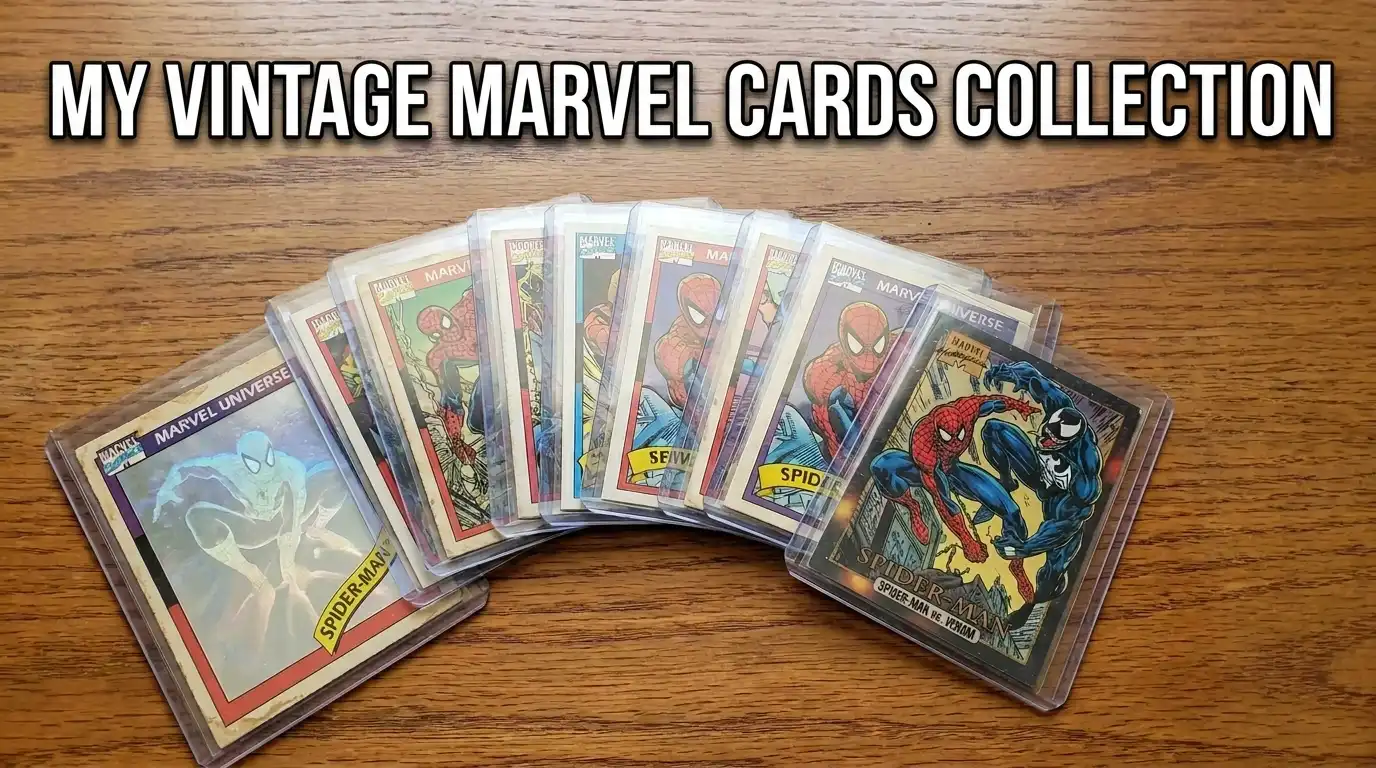

The auction email arrived at midnight. Subject line: “1990 Marvel Universe Impel Uncut Sheet – RARE.” I clicked through half-asleep, expecting another overpriced eBay listing for commons someone thought were valuable because they were old.
The listing showed a full uncut printer’s sheet, 132 cards still connected, never separated, never distributed. Cards #1-132 from the original 1990 series, exactly as they came off the printing press before being cut into individual cards and packaged into wax packs.
Starting bid: $8,500. Buy It Now: $15,000.
I closed my laptop and went back to bed. But I couldn’t stop thinking about it. An uncut sheet represents the platonic ideal of rarity, a production artifact that was never meant to reach collectors, preserved accidentally, and now existing as a one-of-one historical object.
That’s what rarest Marvel Universe cards really are. Not just expensive. Not just old. Genuinely scarce pieces that survived production errors, limited print runs, convention exclusives, or sheer historical accident.
This guide ranks the ten rarest and most valuable Marvel trading cards ever produced, with real market data and the stories that make collectors chase them.
What Makes a Marvel Card Truly Rare?
A Marvel card becomes truly rare through limited production runs, printing errors, convention-exclusive distribution, artist proof status, or historical circumstances that prevented widespread circulation. Rarity alone doesn’t guarantee value, desirability, condition, and character demand must intersect with scarcity.
Scarcity takes many forms. A card might be rare because only 10 were printed. Or because a production error destroyed most of the print run. Or because it was distributed exclusively at one convention to 500 attendees. Or because it’s an artist proof that was never meant for public sale.
The rarest cards maximize multiple scarcity factors simultaneously. A convention exclusive (#/500) signed by Stan Lee (deceased) featuring Spider-Man (peak demand) in PSA 10 condition (pop 1) becomes exponentially rarer than the sum of its parts.
For context on how rarity affects values across the broader non-sports trading card market, Marvel cards follow similar patterns to vintage Star Wars and other premium collectibles, condition, character, and provenance multiply scarcity premiums.
10 – 1992 Marvel Masterpieces Series 1 Uncut Sheet
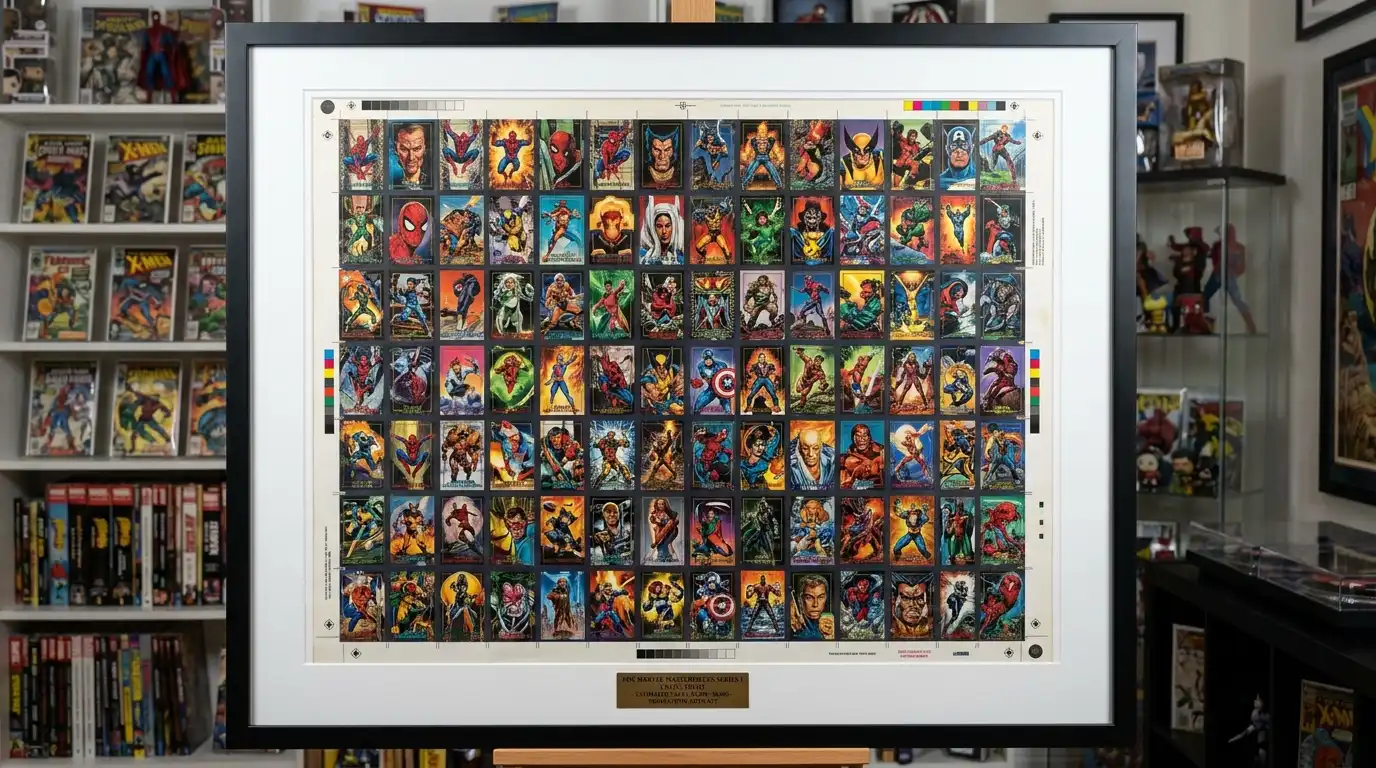
Estimated Value: $3,000 – $6,000 What It Is: A complete uncut printer’s sheet containing all base cards from the 1992 Marvel Masterpieces Series 1 release, never separated into individual cards.
Uncut sheets are production artifacts that occasionally escape printing facilities and enter the collector market. The 1992 Masterpieces sheet contains the Joe Jusko painted artwork that defined the premium Marvel card aesthetic of the 1990s.
These sheets measure roughly 40″ x 50″ and contain 100-200 cards depending on the specific production run. They’re nearly impossible to store, difficult to display, and essentially uncollectible in the traditional sense. But they’re historically significant and visually stunning.
Collectors who own uncut sheets typically frame them as wall art rather than keeping them in storage. The Masterpieces sheet, with its painted comic artwork, functions as both collectible and art piece.
Why collectors love this: It’s a window into the production process. You can see print registration marks, color bars, and cutting guides that were never meant for public view. It’s the card set before it became cards.
9 – 1994 Flair Marvel Annual Buyback Autographs
Estimated Value: $2,000 – $5,000 per card What It Is: Original 1994 Flair Marvel Annual cards that Fleer bought back years later and had signed by the depicted artists, then inserted into newer products as ultra-rare chase cards.
Buyback programs work like this: A card company acquires cards from their own vintage releases, authenticates them, adds autographs or special serial numbering, then reinserts them into modern products. The original 1994 Flair cards were premium embossed releases. Years later, Fleer bought some back and had artists sign them.
Print runs were minuscule, often 5-10 copies per character. Some buybacks were one-of-ones.
The combination of vintage card + modern autograph + ultra-low print run creates triple scarcity.
Specific high-value buybacks include Spider-Man signed by John Romita Sr., Wolverine signed by Joe Quesada, and any card signed by Stan Lee before his passing.
Why collectors love this: Buybacks bridge eras. You’re holding a 1994 card with a 2010s autograph, creating a timeline artifact that shouldn’t exist but does.
8 – 2016 Marvel Masterpieces Artist Sketch 1/1s (High-End Artists)
Estimated Value: $4,000 – $12,000 What It Is: One-of-one original artwork sketch cards from top-tier artists like Brian Kong, Cat Staggs, and Randy Martinez, featuring major characters rendered in museum-quality detail.
Not all sketch cards are created equal. A rough pencil sketch by an unknown artist might sell for $30. A fully rendered, colored, museum-quality piece by a legendary artist can sell for low five figures.
The 2016 Upper Deck Marvel Masterpieces product featured some of the finest sketch work ever inserted into trading card packs. Brian Kong’s Spider-Man sketches from this release routinely sell for $8,000-$12,000. Cat Staggs’ Black Widow and Scarlet Witch sketches hit similar numbers.
These aren’t cards. They’re miniature paintings on card stock. The detail, composition, and technical execution rival commissioned art selling for thousands in gallery settings.
Why collectors love this: You can pull a Kong sketch from a $150 hobby box at a card shop. The lottery-ticket aspect combined with genuine artistic merit creates a market unlike any other insert type.
7 – 1990 Marvel Universe Impel Hologram Error Cards
Estimated Value: $1,500 – $4,000 What It Is: Production error holograms from the original 1990 Marvel Universe set where the holographic image printed incorrectly, creating misaligned or inverted effects.
The 1990 Marvel Universe set included five hologram chase cards (Spider-Man, Captain America, Hulk, Punisher, Wolverine). During production, some holograms printed with errors, images shifted, colors misregistered, or effects inverted.
Impel caught most errors and destroyed them. A small number reached circulation. Collectors who noticed the errors in the 1990s kept them as curiosities. Thirty-five years later, they’re worth thousands.
The Spider-Man hologram error, where the web pattern prints offset from the figure, is the most valuable. Only a handful of confirmed examples exist in collector hands.
Why collectors love this: Errors that shouldn’t exist. The 1990 set is foundational to Marvel card collecting, and owning a documented production error from that release means owning a piece of hobby mythology.
6 – 2008 Marvel Masterpieces Stan Lee Cut Signature /5
Estimated Value: $5,000 – $10,000 What It Is: Cards containing authenticated Stan Lee signatures cut from contracts, letters, or personal documents, embedded into premium cards and serial-numbered to 5 copies total.
Cut signatures are controversial in the hobby. They’re real signatures, but they come from documents cut apart rather than cards signed specifically for the product. Stan Lee cut signatures appeared in several Marvel products before his passing in 2018.
The 2008 Masterpieces cuts are especially valuable because they paired Stan’s signature with premium artwork and ultra-low print runs. Only 5 copies exist per character. Finding one in circulation is rare. Finding one for sale is rarer.
Post-2018, all Stan Lee signatures are archive signatures from cards he signed before his death.
New signatures will never exist. Cut signatures from 2008 represent frozen scarcity.
Why collectors love this: Stan Lee created Marvel. His signature on a Marvel card carries symbolic weight beyond the autograph itself. It’s the creator blessing the creation.
5 – 1966 Donruss Marvel Super Heroes Wax Box (Unopened)
Estimated Value: $8,000 – $15,000 What It Is: A factory-sealed wax box from the 1966 Donruss Marvel Super Heroes set, containing 24 unopened packs with original cards predating the modern Marvel card market.
The 1966 Donruss Marvel set is prehistoric by trading card standards. It released before the 1990 Impel set established Marvel cards as a category. Distribution was limited. Survival rates for sealed boxes are essentially zero.
An unopened 1966 box contains 24 packs. Each pack contains cards that haven’t been seen in sixty years. The box itself is a time capsule, original cellophane, original Donruss branding, original wax packs with gum that’s now fossilized.
Collectors who own these boxes face an impossible choice: keep it sealed as a historical artifact, or open it and discover cards that might not have survived anywhere else.
Why collectors love this: It predates the hobby. Opening a 1966 pack means pulling cards that were printed when Stan Lee was still actively writing Amazing Spider-Man #38. It’s archaeology in cardboard form.
4 – 2014 Marvel Premier Quadruple Autograph Booklet (Avengers) /5
Estimated Value: $10,000 – $20,000 What It Is: Multi-panel booklet cards containing on-card autographs from four MCU actors (typically Robert Downey Jr., Chris Evans, Scarlett Johansson, Chris Hemsworth), serial-numbered to 5 copies.
Multi-autograph booklets are the premium chase content in modern Marvel products. Getting four A-list actors to sign the same card set requires coordination across years of production cycles.
The 2014 Marvel Premier release featured quad-auto booklets with various Avengers combinations. An RDJ/Evans/Johansson/Hemsworth quad numbered /5 sold at auction in 2021 for $18,500.
These booklets fold out to reveal four panels, each with an on-card signature and film image.
They’re presentation pieces, too valuable to store in binders, too important to leave unprotected.
Why collectors love this: Four Avengers, one card. The original six Avengers will never reunite on screen. Owning their signatures together on a single card captures a moment in cinematic history that’s permanently closed.
3, 1993 SkyBox Marvel Masterpieces Spectra Uncut Sheet
Estimated Value: $12,000 – $25,000 What It Is: An uncut printer’s sheet of the ultra-rare SkyBox Marvel Masterpieces Spectra parallel set, where every card features chromium foil technology applied to Joe Jusko’s painted artwork.
The Spectra parallel was revolutionary in 1993, chromium coating over hand-painted art created cards that looked like nothing else in the market. Individual Spectra cards sell for $50-$200 depending on character.
An uncut Spectra sheet contains every card in the parallel set, never separated, preserved exactly as it came off the printing line. These sheets are almost mythical, collectors know they exist, but actual sightings are rare.
Only a handful of confirmed Spectra sheets exist in private collections. They occasionally surface at major auctions where they sell for five figures to institutional collectors or museums.
Why collectors love this: It’s the pinnacle of 1990s Marvel card production. Chromium foil technology, painted artwork, uncut sheet format, every dimension of premium collectibility maximized simultaneously.
2 – 1990 Marvel Universe Impel Promotional Uncut Sheet (Signed by Artists)
Estimated Value: $15,000 – $30,000 What It Is: Promotional uncut sheets of the 1990 Marvel Universe set distributed to comic shops and conventions, signed by Jim Lee and other contributing artists.
Impel produced promotional uncut sheets to market the 1990 Marvel Universe set to retailers and at comic conventions. Some sheets were signed by featured artists during promotional tours.
Jim Lee, Marc Silvestri, and other X-Men artists signed limited numbers.
A sheet signed by Jim Lee before he left Marvel to co-found Image Comics is especially valuable.
Lee’s association with the 1990 set is legendary, and sheets bearing his signature represent frozen moments from the peak of his Marvel career.
These sheets combine rarity (promotional production), historical significance (the set that started Marvel card collecting), and provenance (artist signatures from the era).
Why collectors love this: It’s the hobby’s origin point, signed by the artists who defined it. You’re not just owning cards, you’re owning a signed piece of Marvel card history.
1 – 2019 Marvel Premier RDJ/Stan Lee Dual Autograph 1/1
Estimated Value: $60,000 – $100,000+ What It Is: A one-of-one dual autograph card featuring on-card signatures from both Robert Downey Jr. and Stan Lee, pairing the actor who defined Tony Stark with the creator who invented the character.
This is the holy grail. One card. Two signatures. One living actor at peak MCU fame. One deceased creator who built the universe. Serial-numbered 1/1, only one exists in the world.
Upper Deck produced this card by coordinating years of signings. Stan Lee signed his portion before passing in 2018. RDJ signed his portion during a private signing session. The company assembled both signatures onto one card and inserted it into a 2019 Marvel Premier case.
The card sold at auction in 2022 for a reported $65,000, setting a record for modern Marvel cards.
It will never be replicated. New Stan Lee signatures don’t exist. The partnership between actor and creator is permanently frozen on this single card.
Why collectors love this: It’s perfect. You cannot improve on RDJ/Stan Lee dual autograph 1/1. It’s the character, the creator, the actor, the scarcity, and the symbolism combined into one irreplaceable object.
How Do Rarity and Value Correlate in Marvel Cards?
Rarity drives value only when combined with demand, condition, and historical significance. A card can be one-of-one and worthless if nobody wants it, or numbered to 5,000 and valuable if it features peak-demand characters in pristine condition with proven provenance.
The rarity hierarchy: Print Run Scarcity Cards numbered /5 or less are exponentially rarer than cards numbered /100.
The gap between /5 and 1/1 is massive, each step down in population multiplies rarity premiums.
Production Error Scarcity Error cards that were caught and destroyed during production are rarer than intentionally limited cards. Survival becomes accident rather than design.
Distribution Scarcity Convention exclusives distributed to 500 attendees at one event in 1995 are harder to find than modern /500 parallels distributed worldwide through hobby shops.
Provenance Scarcity Cards signed by deceased creators, cut signatures from historical documents, or artist proofs never meant for public sale carry scarcity that can’t be replicated.
For collectors building high-value Marvel collections, understanding these scarcity layers helps distinguish genuinely rare cards from artificially limited modern parallels.
What Happens to Rarity When Artists or Actors Pass Away?
Card values spike immediately following an artist or actor’s death as collectors rush to acquire signatures and associated cards, then stabilize at elevated levels as supply becomes permanently fixed and demand remains constant among fans.
When Stan Lee passed in 2018, his autograph cards doubled in value within weeks. Prices have stabilized since but never returned to pre-2018 levels. The same pattern occurred with other Marvel creators and actors.
The logic: no new signatures will ever be signed. Supply is frozen. Demand persists because new fans discover Marvel every year through films, comics, and streaming. Fixed supply plus sustained demand equals rising prices over time.
For cards like the RDJ/Stan Lee dual autograph, Stan’s passing made the card more valuable because it can never be replicated. RDJ could sign a thousand more cards. Stan can’t sign one.
Should You Invest in Rarest Marvel Universe Cards?
You should buy rare Marvel cards only if you love Marvel and can afford to hold them for years without needing liquidity. Treat appreciation as a bonus, not a guarantee. The market can collapse if collector interest fades or if counterfeits flood the market.
That said, the rarest Marvel cards have appreciated consistently. The 1990 Impel promotional sheet signed by artists has outperformed traditional investments. Stan Lee cut signatures haven’t depreciated. RDJ/multi-actor booklets have held value.
If you’re buying purely for investment, you’d better understand grading, authentication, market cycles, and exit strategies. If you’re buying because you love Marvel and want to own the best cards in the hobby, then buy them, enjoy them, and let the market do what it does.
I don’t buy cards to flip. I buy cards to own. My most valuable card is a Jim Lee Wolverine sketch I pulled from a $150 box in 2015. It’s probably worth $3,000-$4,000 now. I’ve never checked recent comps. I bought it because I love Wolverine and I love Jim Lee’s art. That’s the right reason.
Rarity Is a Story, Not Just a Number
The rarest Marvel cards on this list range from $3,000 to $100,000+. The numbers are real. The sales are documented. The market exists.
But rarity without context is meaningless. A card numbered 1/1 is just a number unless it tells a story. The RDJ/Stan Lee dual tells a story about creator and actor. The 1966 Donruss box tells a story about the hobby’s prehistory. The 1990 promotional sheet tells a story about the set that started everything.
The cards worth chasing are the ones with stories worth remembering.
For comprehensive coverage of Marvel trading cards across all eras and formats, explore Marvel Cinematic Universe Cards: A Complete Collection Guide to understand how rare modern cards connect to the hobby’s broader history and value structures.