
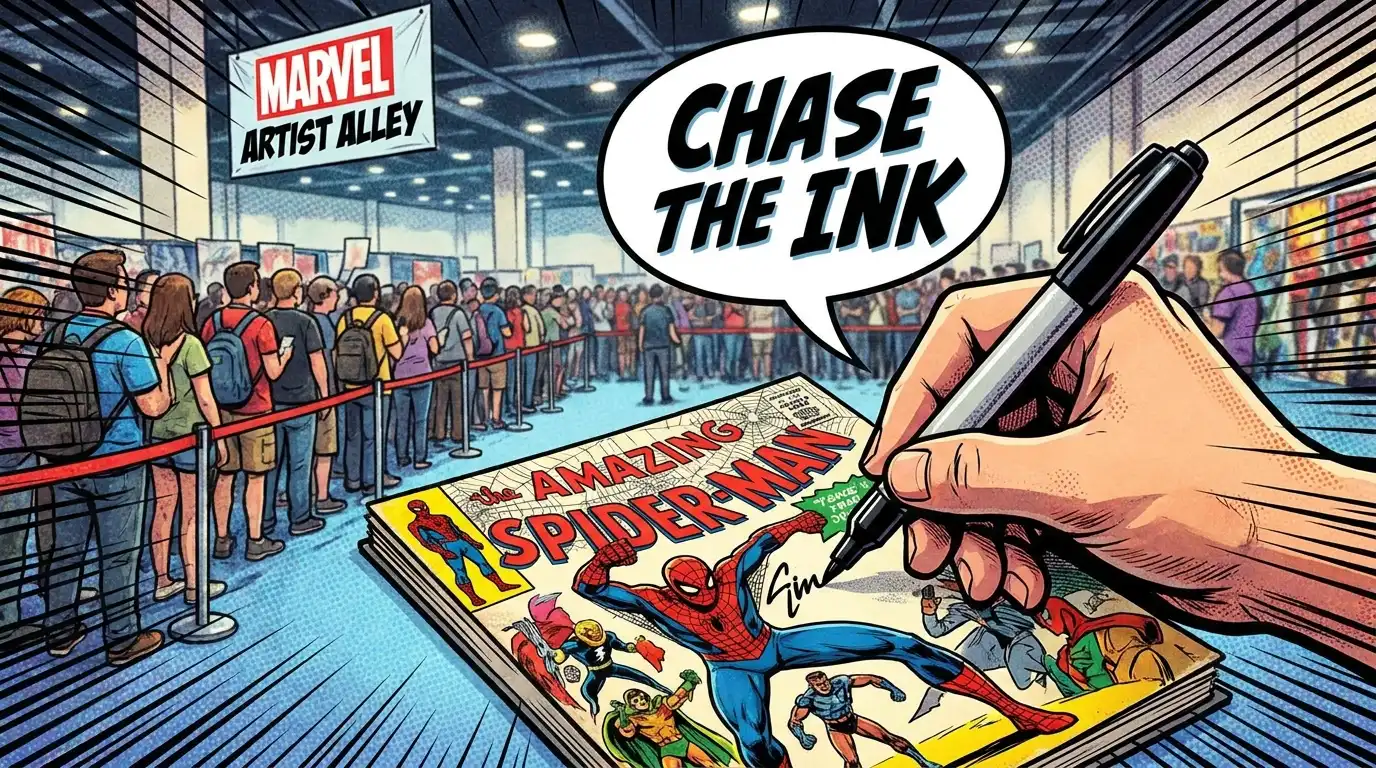

Marvel comic artist autographs are one of the hobby’s most underrated chases because they connect a card to the people who actually shaped how Marvel heroes look. Actor signatures may receive louder attention, and one-of-one sketches create bigger opening-day excitement, but a strong artist autograph can offer creator history, attractive artwork, and genuine scarcity for far less money.
The best examples are not random signatures placed on random cards. They pair an important artist with artwork, characters, or sets that make sense. That creator-to-card connection is exactly where smart collectors should look.
What Are Marvel Comic Artist Autographs?
Marvel comic artist autographs are officially issued or privately signed cards featuring illustrators, painters, cover artists, pencilers, inkers, or other visual creators connected to Marvel. Unlike an actor autograph, the signature celebrates the person responsible for creating or defining the image.
Autograph cards have been a standard non-sport chase for decades, using on-card signatures, signed stickers, multi-signature formats, and signatures from behind-the-scenes creators as well as cast members.
Common formats include:
- Manufacturer-certified pack-issued autographs
- Numbered autograph parallels
- Convention- or private-signing cards
- Dual writer-and-artist autographs
- Signed sketch cards with original artwork
- Older Marvel cards signed later as buybacks
These formats should not be valued equally. Certification, card choice, signature placement, and the artist’s connection to the image all matter.
Why Are Marvel Artist Autograph Cards Underrated?
Marvel artist autograph cards are underrated because casual collectors understand actors and characters faster than comic creators. Most buyers recognize Wolverine immediately; fewer know which artist designed a famous cover, painted a landmark card set, or defined a major comic era.
That knowledge gap can create opportunity. A respected artist’s autograph may sell below a less scarce celebrity signature simply because fewer buyers search the creator’s name.
Why Do Actor Autographs Get More Attention?
Actor autographs get more attention because film and television audiences are enormous. A major Marvel Cinematic Universe signature is easy to market even to someone who has never opened a comic.
Artist cards require more research: why the name matters, which characters fit the creator, and whether the image strengthens that connection. That extra work can reward patient collectors.
Do Sketch Cards Overshadow Artist Autographs?
Yes, sketch cards often overshadow regular autographs because original artwork feels unique. However, sketches add subjective variables such as composition, color, character, and effort.
Artist autographs offer a useful middle ground: more creator history than a normal parallel, but usually a lower price and easier comparison than a premium one-of-one sketch.
Why Does the Artist Matter So Much on Marvel Cards?
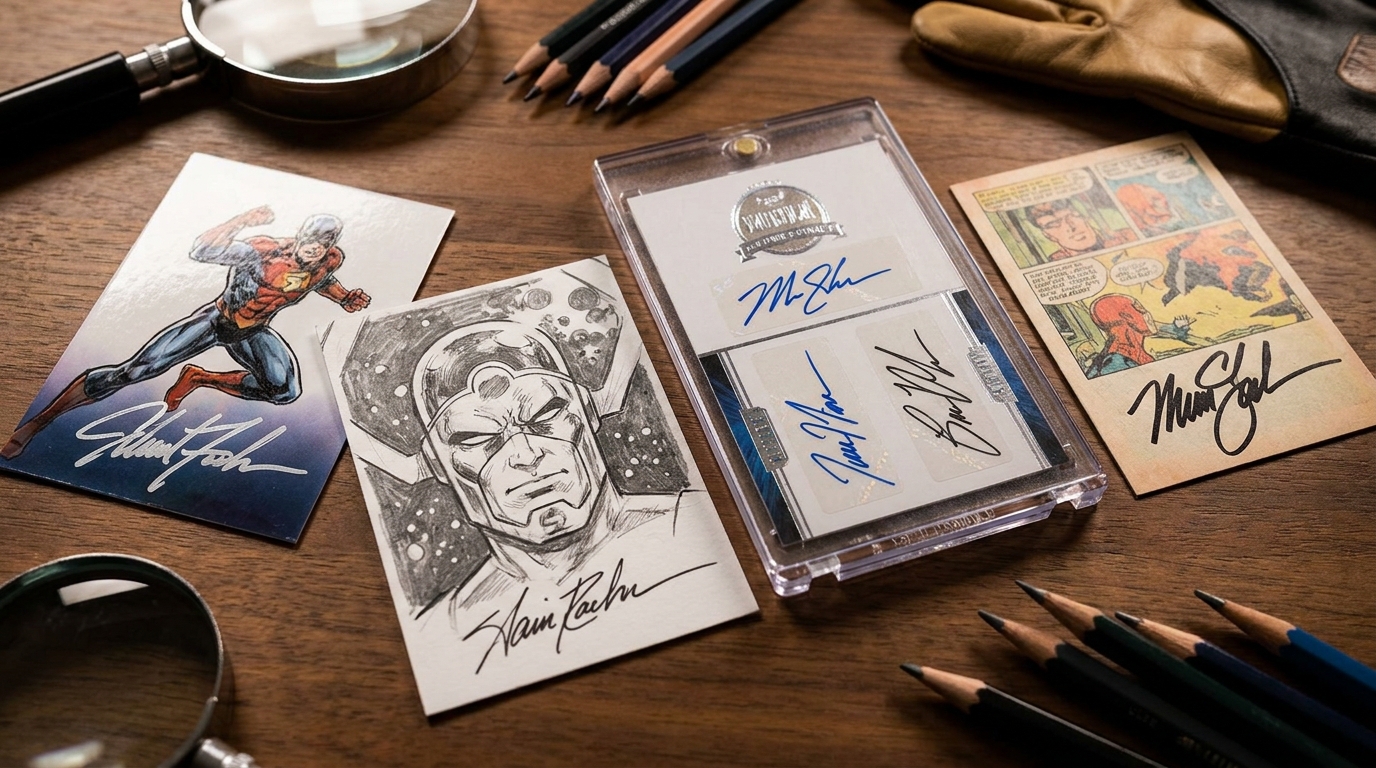
The artist matters because Marvel cards are remembered through imagery. Joe Jusko’s fully painted 1992 Marvel Masterpieces set became a landmark release, and his work is closely associated with the painted trading-card boom of the 1990s.
Later Marvel Masterpieces releases highlighted creators including the Hildebrandt brothers and multi-artist checklists. The brand’s history also includes sketch cards and writer autographs, proving creator-focused collecting is not a new gimmick.
The strongest autograph connects the character, artwork, creator’s career, and card-set history in one compact collectible.
Which Marvel Comic Artists Should Collectors Target?
Collectors should target artists with a meaningful connection to the card, a recognizable style, and an audience beyond one product. A famous name helps, but the strongest card is usually the one where creator and subject clearly belong together.
Which Classic Marvel Card Artists Matter Most?
Classic card artists offer the best historical connection. Joe Jusko is an obvious Marvel Masterpieces target. The Hildebrandt brothers, Julie Bell, Boris Vallejo, and other painters associated with premium fantasy and comic-card art also attract artist-focused collectors.
Look for cards reproducing work already associated with that creator. A signature on unrelated stock artwork loses much of its story.
Which Modern Cover Artists Have Crossover Appeal?
Modern cover artists can attract both card and comic collectors. Creators such as Peach Momoko, Skottie Young, Alex Ross, Jim Lee, David Nakayama, Art Adams, and Mark Brooks have recognizable styles and devoted followings.
A card using the signer’s own cover art is generally stronger than a generic character card signed later. The closer the autograph sits to the creator’s actual work, the clearer the collectible becomes.
Should Collectors Consider Writers, Inkers, and Colorists?
Yes, especially when the card represents a famous creative team or storyline. Dual writer-and-artist autographs can be more meaningful than either signature on an unrelated image.
The market may be thinner for inkers or colorists, so buy for history and personal interest before buying for resale.
What Makes a Marvel Artist Autograph Valuable?
A Marvel artist autograph becomes valuable when creator importance, card relevance, scarcity, presentation, and collector demand work together.
| Value factor | Why it matters | Collector warning |
|---|---|---|
| Artist reputation | Creates demand beyond one set | Fame cannot rescue a weak card |
| Artwork connection | Makes the signature intentional | Generic images weaken the story |
| Character popularity | Expands the buyer pool | Popular does not always mean rare |
| Numbering | Gives a visible supply ceiling | Low supply still needs demand |
| Signature format | On-card and bold ink display well | Poor placement hurts presentation |
| Certification | Improves buyer confidence | Certification does not guarantee value |
The best formula is simple: important artist, relevant artwork, desirable character, and verifiable scarcity.
Does a Low Serial Number Guarantee Value?
No. A card numbered to 10 can remain difficult to sell if the artist or design has weak demand. I would rather own an attractive card numbered to 50 from a major creator than an awkward card numbered to five from a name few collectors follow.
Are On-Card Marvel Artist Autographs Better Than Stickers?
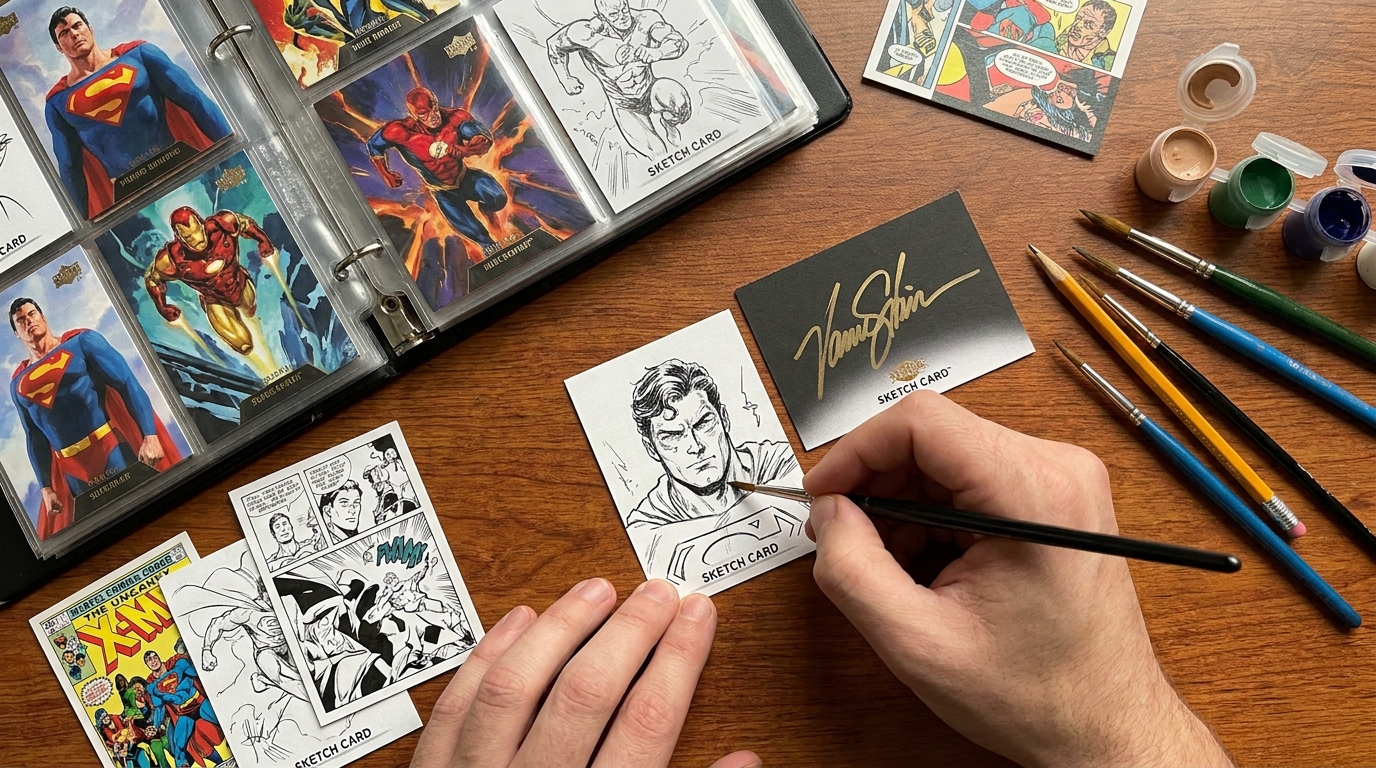
On-card autographs are usually more desirable because the creator physically signed the card itself. Sticker autographs can still work when the label fits the design and the signature remains clean.
Inspect whether the ink is bold, fully visible, correctly placed, and certified on the back. A beautiful on-card signature normally wins, but a clean sticker autograph of the right artist can still be a smart buy.
Marvel Artist Autographs vs. Sketch Cards: Which Is Better?
Artist autographs are better for affordable creator collecting, while sketch cards are better for collectors seeking original art. Neither category is automatically superior.
| Category | Artist autograph | Sketch card |
|---|---|---|
| Main appeal | Signature and creator history | Original artwork |
| Typical uniqueness | Limited but repeatable | Often one of one |
| Price comparison | Easier | Highly subjective |
| Condition | Usually standard card issues | Can have handling or medium flaws |
| Best for | Autograph sets and creator collectors | Art-focused collectors |
| Biggest risk | Weak card-to-artist connection | Paying heavily for average artwork |
A signed sketch card can combine both worlds, but those cards should be judged primarily as artwork. A rushed pencil headshot is not automatically better than a beautifully designed autograph card just because it is technically unique.
How Can You Authenticate a Marvel Artist Autograph?
Authenticate an artist autograph by starting with manufacturer-certified cards and using reputable third-party authentication for convention or private-signing examples. Never rely only on a seller claiming the card was signed in person.
Look for certification text, holograms, signing records, receipts, convention documentation, and consistent signature characteristics. Provenance matters most when the autograph is expensive or the artist rarely signs.
Are Convention-Signed Marvel Cards Worth Buying?
Yes, when the card choice is strong and the signing is documented. Convention cards can offer better placement or inscriptions, but some buyers prefer pack-issued autographs. If resale matters, choose a recognizable card and obtain authentication.
Should You Grade Marvel Comic Artist Autographs?
Grade Marvel artist autographs when the card is scarce, clean, and valuable enough to justify the fee. For privately signed cards, autograph authentication may matter more than chasing a perfect numerical grade.
Check edge whitening, chrome scratches, print lines, handling marks, and ink quality. For lower-cost cards, an archival sleeve or magnetic holder may offer better value. A slab is a presentation choice, not proof that the card is important.
What Signature Details Do Experienced Collectors Notice?
Experienced collectors notice ink color, placement, size, and consistency before they look at the serial number. A bold signature placed in open space usually displays better than a cramped autograph crossing a character’s face. Silver or gold paint pens can look excellent on dark cards, but they may show skips, pooling, or surface wear.
I also check whether the signer added a year, character name, short inscription, or tiny remarque. Those extras can make two otherwise identical cards feel completely different. They do not always add resale value, but they often add personality-the exact reason creator autographs are fun to collect.
Are Marvel Comic Artist Autographs Good Investments?
Marvel comic artist autographs can be strong long-term collectibles, but they are not guaranteed investments. Their advantage is cultural depth: the artist may have fans in comics, original art, posters, variant covers, and trading cards.
Their risk is liquidity. The buyer pool for a specific artist can be smaller than the market for a major actor or universally popular character. Asking prices may look impressive while completed sales remain limited.
The safest approach is to buy signatures with a strong creator-to-card connection at a price you would accept even if the market stayed flat.
How Should Beginners Start Collecting Marvel Artist Autos?
Beginners should start with one artist, one character, or one set instead of buying random signatures. A narrow focus makes it easier to understand availability, pricing, and which cards actually matter.
Try this five-step plan:
- Choose an artist whose work you genuinely recognize.
- Learn the Marvel characters and sets connected to that artist.
- Compare certified cards with convention-signed examples.
- Track completed sales rather than ambitious listings.
- Buy one strong card before chasing parallels.
A small collection with a clear story will usually feel more satisfying than a box of unrelated autographs.
Frequently Asked Questions
Are Marvel Artist Autographs Rarer Than Actor Autographs?
Sometimes, but rarity depends on the artist, product, signing frequency, and distribution-not the signer’s job title.
What Is the Best Character for an Artist Autograph?
The best character is one strongly associated with the artist. A natural creator-character pairing has more appeal than a random popular hero.
Are Facsimile Signatures Real Autographs?
No. A facsimile is a printed reproduction and should not be valued like a hand-signed card.
Do Artist Inscriptions Add Value?
They can when the inscription is relevant and attractive. Personal names may narrow the resale audience.
Should I Buy an Artist Auto or an Original Sketch?
Buy the autograph for creator history and predictable presentation; buy the sketch when original art is your main priority.
Can Artist Autographs Be Collected as a Complete Set?
Yes, but check the checklist first. Short-printed signers can make a complete run much harder than it appears.
Final Thoughts
Marvel comic artist autographs deserve more attention because they celebrate the creators behind the characters rather than only the faces who played them on screen. The best cards connect a respected artist to meaningful artwork, a fitting character, and a clearly documented release.
My honest choice would be one excellent creator-to-card match over several random low-numbered signatures. Start with an artist whose work you love, verify the autograph, and ignore hype that relies only on scarcity. A great Marvel artist auto is not just signed cardboard-it is a compact piece of comic and trading-card history.