
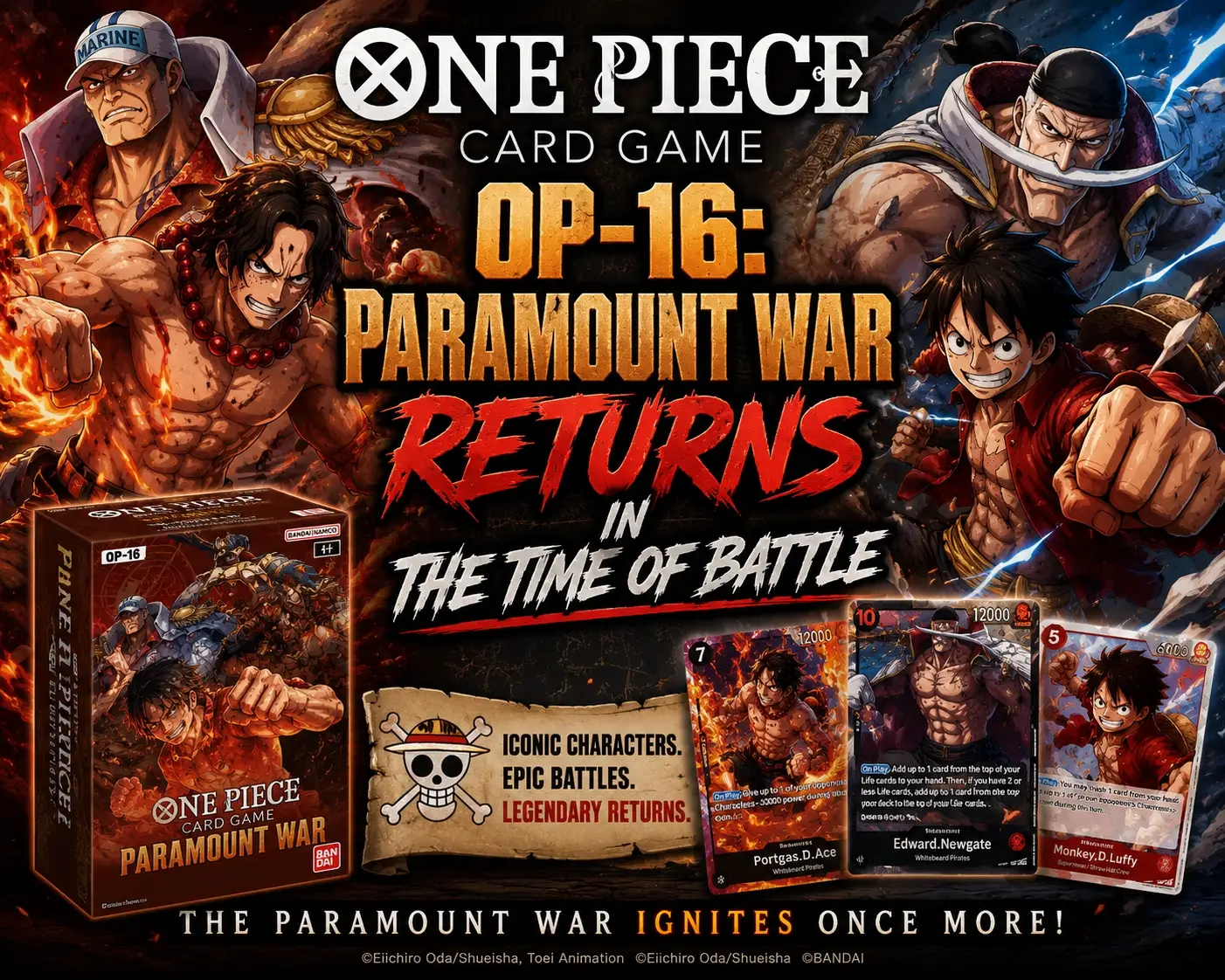

Bandai picked the one arc that still makes fans put their phones down and stare at the wall, and turned it into a booster set. releases/”>One Piece Card Game OP-16: The Time of Battle drops June 12, 2026, and it’s themed around the Paramount War.
Yes, that war. The one with Ace. The one with Whitebeard. The one that broke a generation of anime fans in half. If you’ve been on the fence about jumping into One Piece TCG, this is the set the whole community is going to be talking about for months. Here’s why.
What Is One Piece Card Game OP-16 The Time of Battle?
OP-16: The Time of Battle is the 16th main booster pack in the One Piece Card Game series, releasing June 12, 2026 . The set is themed around the Paramount War (also known as the Marineford / Summit War arc) and contains 126+1 total card types across the standard One Piece rarities, including new Leaders, Treasure Rare cards, and a DON!! card.
If you’re new to One Piece Card Game, here’s the quick orientation. Bandai releases numbered booster sets every couple of months, each one centred on a story arc, a faction, or a Yonko crew. OP-16 follows that exact pattern. It picks one of the most iconic arcs in the franchise and turns it into cardboard.
What makes this drop hit different is the emotional weight of the source material. Other sets have given us pirate crews, marine officers, or world government characters. This one gives us the moment, the day everything changed for the Straw Hats and the wider One Piece world.
Why The Paramount War Theme Hits So Hard
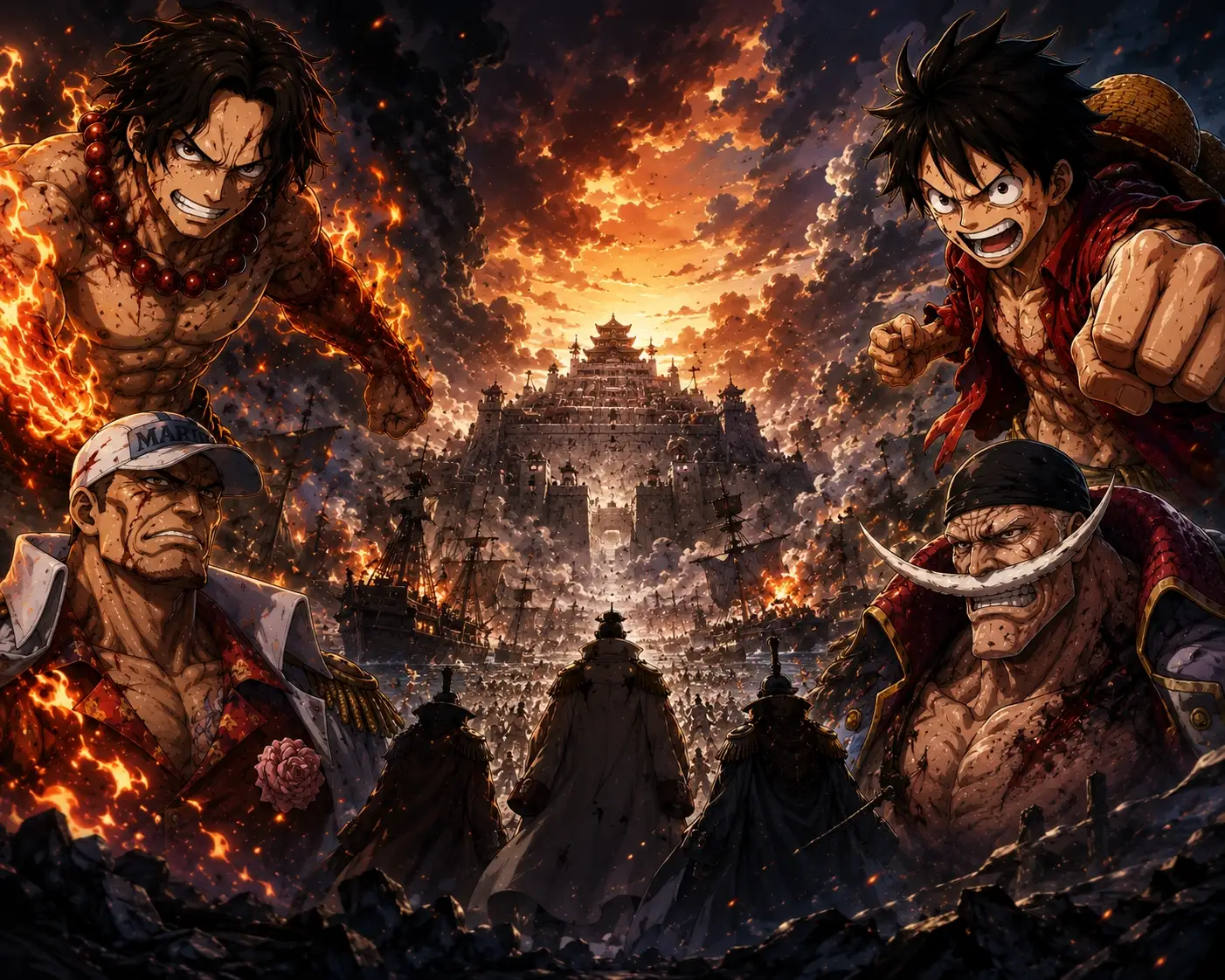
The Paramount War is widely considered one of the most emotionally devastating arcs in all of shōnen anime, which makes any TCG product tied to it land harder than a normal set. OP-16 isn’t just selling cards, it’s selling a moment fans have been collectively grieving for over a decade.
Let’s not pretend otherwise. The Paramount War is the arc where Luffy fails. He doesn’t get a comeback win. He doesn’t pull a last-minute plot armour move. He gets to his brother, he sees the impossible happen, and then the world keeps moving without Ace in it.
That’s heavy emotional territory for a trading card set. And it’s also exactly the kind of theme that creates a different type of collector, one who isn’t just chasing meta cards, but chasing memories.
From a TCG market perspective, that emotional pull tends to translate into a few patterns worth understanding:
- Stronger casual demand. Fans who don’t normally chase competitive cards will still want a Whitebeard or Ace card from this set.
- Higher Secret Rare interest. The big emotional characters tend to get the chase-art treatment, and those cards historically outperform mid-rarity prints in resale.
- Long-tail value. Story-arc-themed sets often hold appeal longer than purely meta sets because their pull is nostalgic rather than seasonal.
What’s Inside the OP-16 Booster Pack, Confirmed Card Breakdown
OP-16 contains 126+1 total card types spread across the standard One Piece Card Game rarity ladder, Commons, Uncommons, Rares, Super Rares, Secret Rares, Leaders, Specials, Treasure Rare, and a DON!! card.
Here’s the rarity structure based on the official set listing:
| Rarity | What It Means | Why It Matters |
|---|---|---|
| Common (C) | Base-tier playable cards | Build the bulk of decks |
| Uncommon (UC) | Mid-tier playable cards | Support roles in most decks |
| Rare (R) | Higher-impact cards | Often deck-defining role players |
| Super Rare (SR) | Premium pulls | Frequently the chase characters |
| Secret Rare (SEC) | Limited print, alternate art | The headline collector cards |
| Leader (L) | Deck-defining anchor cards | Determine your whole strategy |
| Special (SP) | Special print versions | Variant art for popular cards |
| Treasure Rare (TR) | Top-tier chase rarity | The “lottery win” of any pack |
| DON!! Card | Resource card for gameplay | Powers up your cards in play |
One thing worth being clear on: the brief confirms 126+1 card types and the rarity list, but specific card identities, character pulls, and which characters get Secret Rare or Treasure Rare treatment will only be fully visible once the set drops and the community starts unboxing.
Don’t trust pre-release “leaks” floating around marketplaces without verifying against Bandai’s official set page.
Who Should Buy OP-16, Players vs Collectors
If you play One Piece Card Game competitively, OP-16 is essentially required reading because the set introduces new Leaders and synergies. If you collect for art and story, this set is one of the strongest emotional-value drops of 2026 and worth buying for that alone.
For the players
New Leader cards mean new viable archetypes. Every fresh One Piece set tends to shake the meta, sometimes gently, sometimes violently, and Paramount War-era characters (Whitebeard Pirates, Marines, Warlords) all have strong gameplay potential.
If you’re tournament-minded, you’re not buying OP-16 because it’s optional. You’re buying it because the next round of meta is going to live inside it.
For the collectors
For collectors, the maths is different but the conclusion is the same. Story-arc sets tend to age well because their pull doesn’t fade with rotations. The Paramount War characters won’t stop being iconic in 12 months. They probably won’t stop being iconic in 12 years. That’s exactly the kind of long-tail equity collectors look for.
UK Pre-Order Tips: How to Buy OP-16 Without Getting Burned
Pre-order from established UK TCG retailers at RRP, avoid third-party marketplace listings during launch week, and be cautious of “sealed case” deals that are priced suspiciously below MSRP, those are the most common scam vectors during hyped One Piece set launches.
Three things UK One Piece TCG buyers keep running into:
- Allocation limits. Specialist UK retailers often cap booster box orders during high-demand launches. Pre-order early or expect to be limited to one or two boxes.
- English vs Japanese print confusion. The One Piece Card Game has both English and Japanese print runs and they release on different schedules. Make sure you’re buying the version you actually want.
- Marketplace markups. Eight-day-old launches frequently show third-party listings 30, 50% over RRP. Patience usually wins.
Pro move: Set price alerts on two or three trusted UK TCG retailers and ignore the third-party panic-buying noise for the first two weeks.
Booster Box, Case, or Singles, What’s the Right OP-16 Buy?
Buy a booster box if you want the experience of opening packs and don’t mind the variance. Buy singles if you have a specific card list in mind. Buy a case only if you’re a serious collector, an established reseller, or splitting it with friends.
Most people buying their first One Piece TCG set overthink this decision. Here’s how to cut through it:
- Booster box (12 packs typical for English print): Great for the cracking-packs experience. Worst expected value if your only goal is one specific Secret Rare.
- Singles purchase: Best expected value if you know exactly what you want. Lowest emotional payoff. Highest collector efficiency.
- Case purchase: Only makes sense at scale. Don’t buy a case “to get one Treasure Rare”, the maths almost never works.
Is One Piece OP-16 Worth Pre-Ordering?
Yes. For story fans, players, and collectors, OP-16 The Time of Battle is one of the most emotionally and competitively significant One Piece Card Game drops of 2026. Pre-order early at RRP and you’ll be fine.
Look, every TCG release gets hyped. Some of that hype is marketing. Some of it is real. OP-16 sits firmly on the “real” side because the source arc carries weight that has nothing to do with Bandai’s marketing budget. The Paramount War made people cry in 2010. It still makes people cry in 2026. That kind of emotional engine doesn’t run out.
If you’ve been on the edge about getting into One Piece Card Game, this is the set where the community decides “you should have started here.” Don’t be the person reading about it three months later wishing you’d grabbed a box at RRP.
Pre-order. Open it on launch week. Feel something. That’s what a good TCG release should do.